Key takeaways
- Model users, permissions, data, and workflows before screens.
- Build the riskiest integrations early and release in coherent phases.
- Security, observability, backups, and ownership must be planned from the start.
How this guide was prepared
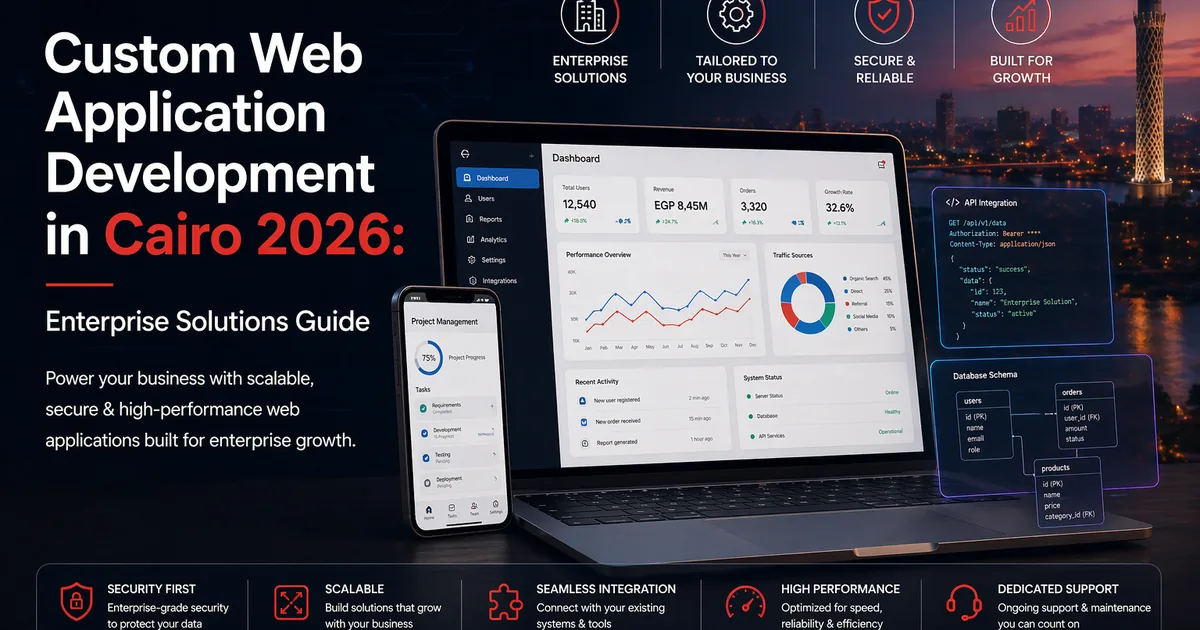
This guide is written for organisations evaluating custom web application development Cairo in Egypt. It separates this intent from direct service-page terms and avoids unsupported prices, rankings, guarantees, or client claims.
The article combines Nova Roids delivery experience, the project portfolio linked on this page, and the named primary technical references. Any volatile commercial detail should be confirmed during discovery.
What this page owns—and what it deliberately excludes
This is the canonical page for the custom web application development Cairo query family. It answers the specific decision below without duplicating the service page or adjacent cluster articles.
Topics intentionally handled elsewhere
- Brochure website pricing
- Mobile app technology comparison
- Software guarantees
Direct service and enquiry intent belongs to our Web Development service page.
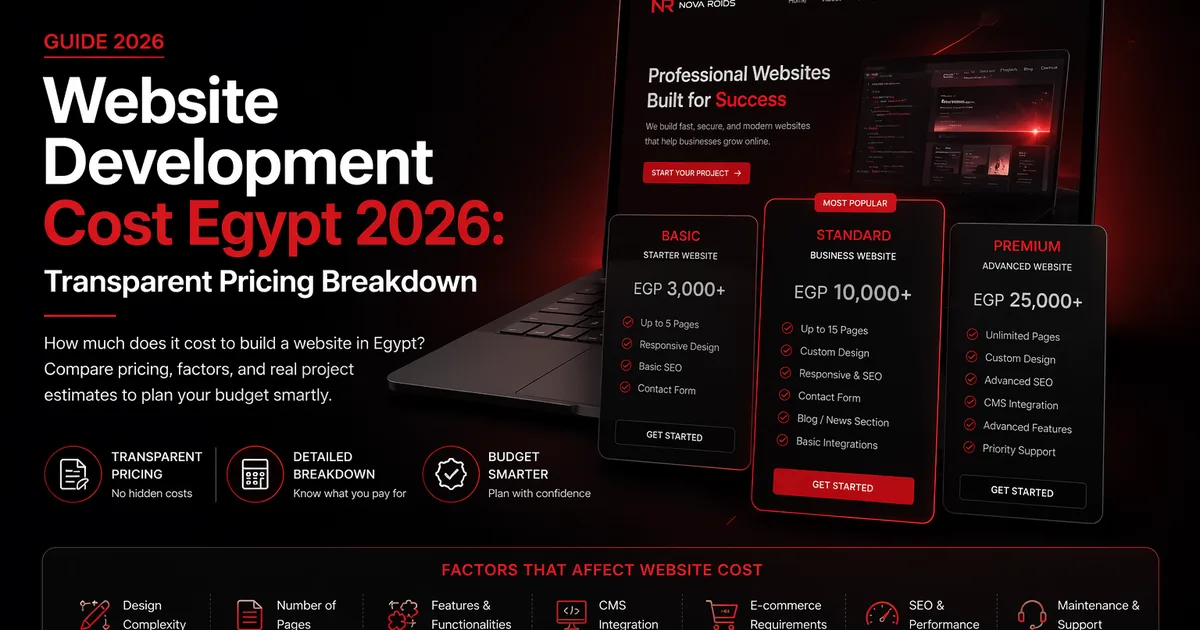
The broader topic is covered by Website Development Cost in Egypt: 2026 Pricing Guide.
Define the workflow before the interface
Custom applications automate or enable a process. Document actors, inputs, decisions, states, exceptions, notifications, and reports before producing detailed screens. This reveals the real complexity and avoids designing around incomplete assumptions.
Ready to move from planning to delivery? Review our web development process and deliverables.
Architecture decisions that affect long-term cost
Choose authentication, permissions, data storage, APIs, deployment, and integrations around scale, risk, compliance, and team capability. A simple modular architecture is usually more valuable than premature complexity.
This article belongs to the Website Development Cost in Egypt: 2026 Pricing Guide topic cluster.
- Role and permission model
- Data ownership and retention
- External API reliability
- Audit logs and reporting
- Backup and disaster recovery
- Monitoring and support responsibilities
Prototype high-risk areas
Test uncertain integrations, large data imports, real-time behavior, permissions, or offline needs before committing to the full implementation. A technical spike can replace weeks of speculation with evidence.
The next related decision is covered in Hire a Web Developer in Egypt: Agency, Freelancer, or Team?.
Release and operate the application
Use staging and production environments, automated checks, documented deployment, migration procedures, monitoring, error reporting, and support ownership. Delivery is complete only when the business can operate the system safely.
Discovery for custom business workflows
Document the current process, users, decisions, data, exceptions, approvals, and systems before designing screens. Ask where work is delayed, duplicated, or dependent on spreadsheets and personal knowledge. A custom application should simplify a real workflow rather than reproduce every existing step digitally.
Define measurable outcomes such as fewer manual handoffs, faster processing, better visibility, reduced errors, or a new customer capability. Custom web application development Cairo projects are easier to prioritise when the business can explain which operating result justifies each feature.
- Current workflow map
- User roles and permissions
- Data and integration inventory
- Exception and approval paths
- Measurable operating outcomes
Data model, permissions, and auditability
Design data relationships and ownership before building complex interfaces. Decide which records are authoritative, who can view or change them, how history is retained, and which actions require approval. Role-based access should follow least privilege and should be tested against real job responsibilities.
For important operations, keep audit logs that explain who changed what and when. Logging should support support teams and accountability without exposing secrets or excessive personal data. Define retention, export, and deletion requirements with appropriate legal advice.
- Authoritative records
- Role-based permissions
- Approval rules
- Audit logs
- Retention and export requirements
Integration and failure-state design
External systems can be slow, unavailable, inconsistent, or rate limited. Define timeouts, retries, duplicate prevention, reconciliation, and human fallback. Users should see a clear status instead of assuming an operation succeeded because a button was clicked.
Use queues or background processing where work cannot complete safely in one request. Monitor integration health and keep identifiers that allow teams to trace a transaction across systems. Document who owns each dependency and how incidents are escalated.
- Timeout and retry rules
- Idempotency and duplicate prevention
- Background processing
- Reconciliation tools
- Operational alerts
Deployment, support, and product ownership
Use separate development, staging, and production environments with controlled access and repeatable deployments. Define testing, backup, rollback, monitoring, and incident procedures before the first production release. The client should own essential repositories, cloud accounts, domains, and data access.
After launch, maintain a product backlog driven by user feedback and operational evidence. Assign an internal product owner who can prioritise work and coordinate stakeholders. Custom software needs ongoing governance; without it, small requests accumulate into inconsistent behaviour and technical debt.
- Controlled environments
- Automated deployment checks
- Monitoring and incident process
- Company-owned accounts
- Named product owner
A staged custom-application roadmap
Start with workflow discovery and a prototype of the riskiest process. Build one complete vertical slice through interface, permissions, data, integration, logging, and reporting. This proves the architecture before the team expands to every module.
Pilot with a small group of real users and keep manual fallback for critical operations. Measure processing time, errors, adoption, and support needs. Expand only after the core workflow is stable and the product owner has a clear prioritised backlog.
- Workflow and risk discovery
- Vertical-slice implementation
- Controlled operational pilot
- Evidence-led module expansion
Custom-application success measures
Track adoption by role, completion of core tasks, processing time, error or exception rate, support tickets, integration failures, and the business outcome that justified the system. Usage volume alone can hide inefficient or forced behaviour.
Review the metrics with users and managers. Some problems require training or process changes rather than new features. Keep technical health—availability, latency, failed jobs, security events, and deployment quality—beside product metrics.
- Role-based adoption
- Task time and completion
- Exception and support rate
- System reliability
Custom application delivery phases
| Phase | Primary output | Decision enabled |
|---|---|---|
| Discovery | Users, workflows, data, risks, and success criteria | Whether the proposed product is coherent and feasible |
| Prototype or technical spike | Validated experience or high-risk integration | Which assumptions require change before full build |
| Incremental delivery | Testable product slices with acceptance criteria | Whether quality and value justify the next phase |
| Production and operation | Deployment, monitoring, backups, documentation, and ownership | Whether the business can operate the system safely |
Questions and checks before you commit
What clients highlighted
“The website finally explains our services clearly, loads fast, and gives our team a cleaner way to receive qualified enquiries.”
“The SEO structure made the site easier to understand. We could see which pages target traffic, which pages convert, and what to publish next.”
Relevant Nova Roids project work
These case studies show related delivery experience. They do not imply that every feature discussed in this guide was used on every project.
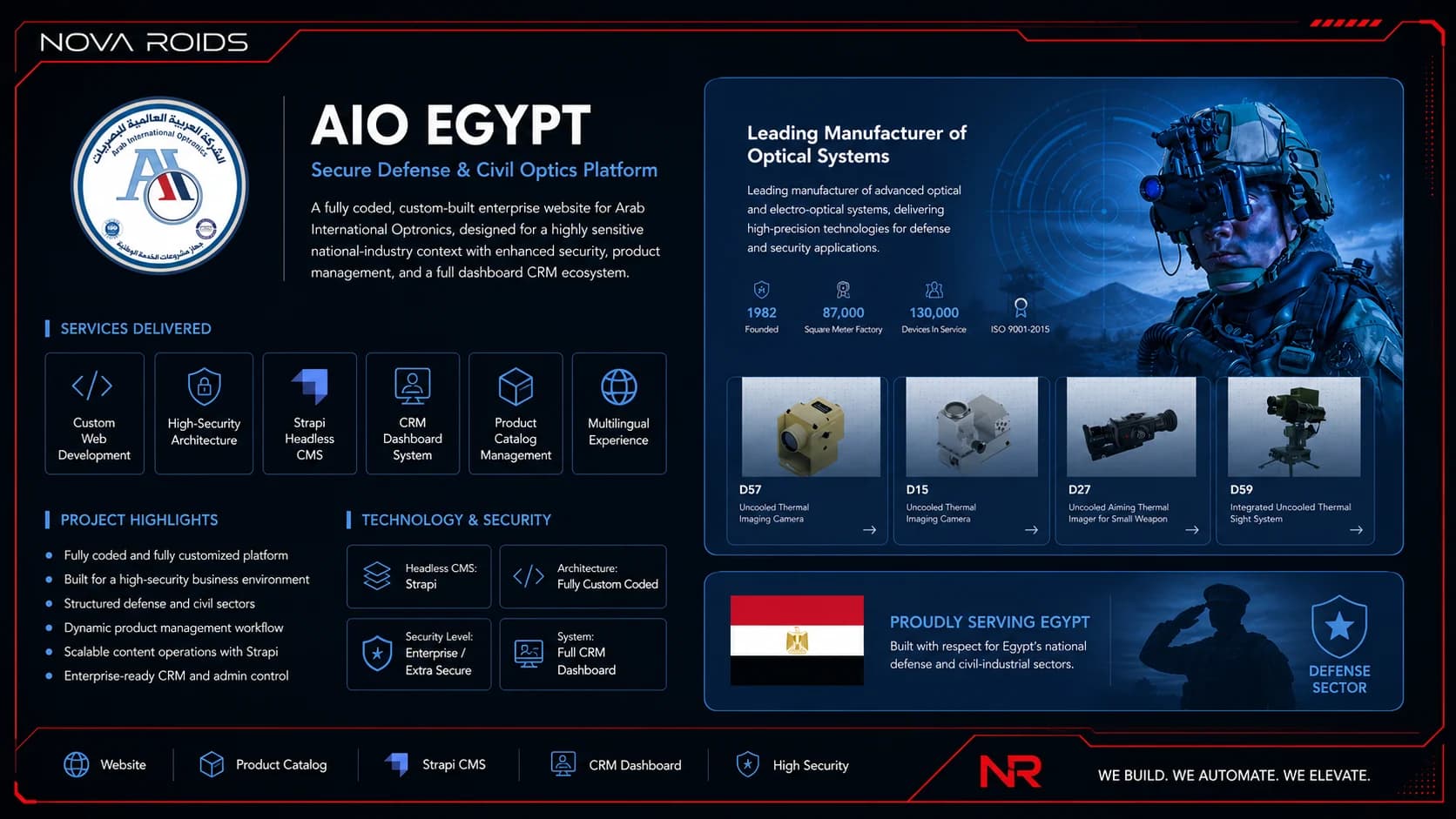
AIO Defense & Civil Platform
A secure multilingual enterprise platform for defense and civil optical systems, product management, content operations, and internal workflows.
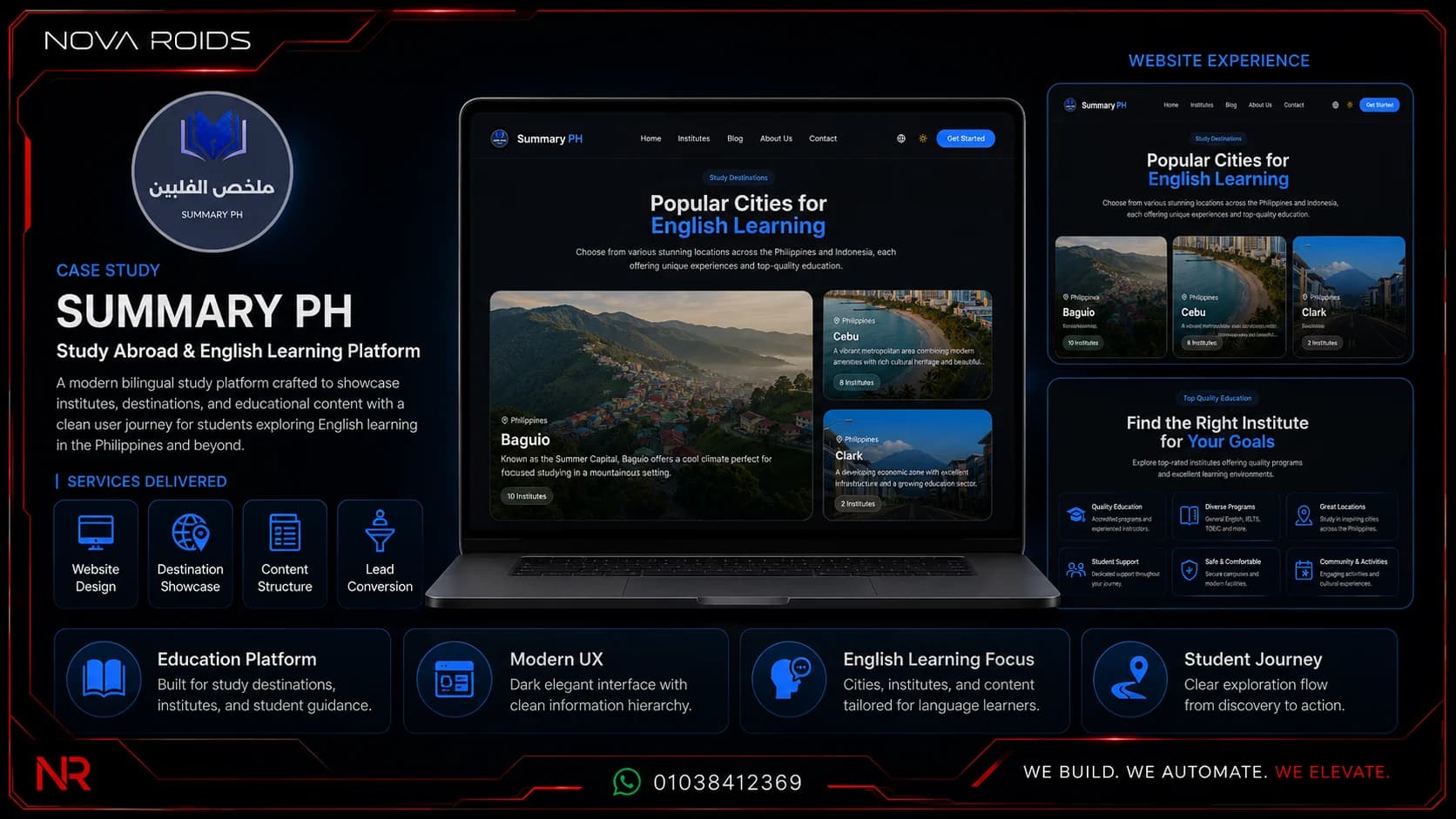
Summary PH Education Directory
A multilingual English-school discovery platform with institute profiles, comparison journeys, inquiry management, and research-led SEO content.
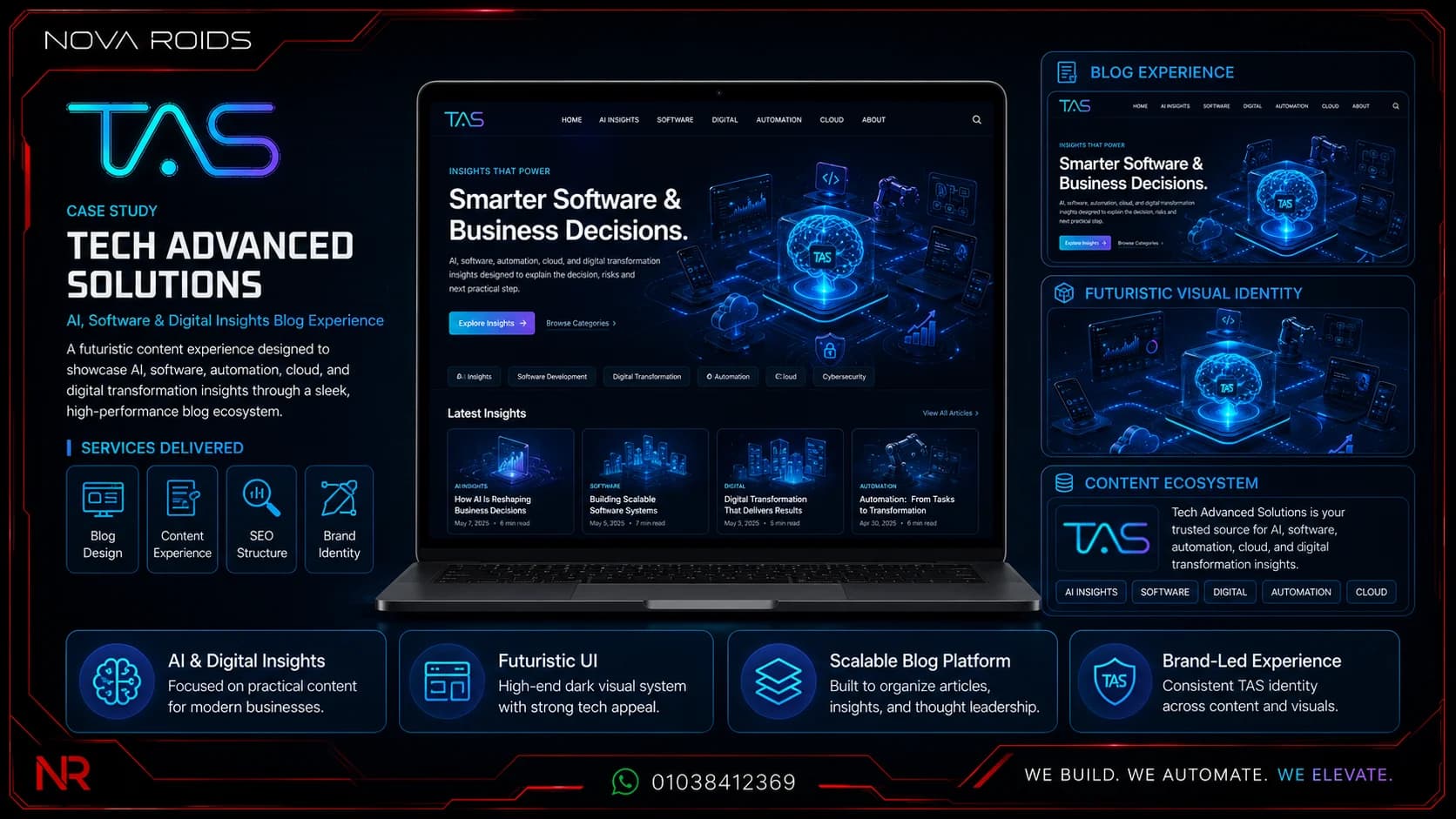
Tech Advanced Solutions
An international applied-AI, software, automation, cloud, and growth platform with product showcases and conversion-led service journeys.
Frequently asked questions
What is a custom web application?+
It is browser-based software built around specific users, data, rules, and workflows rather than a standard marketing website or off-the-shelf tool.
How long does custom web application development take?+
Timing depends on workflow complexity, integrations, data migration, security, UX, and testing. Phased delivery gives earlier feedback and reduces estimation risk.
Do I need a mobile app as well?+
Not always. A responsive web application may cover the use case. A native or cross-platform app is justified when device features, background behavior, store distribution, or offline access are important.
What should I prepare before discussing custom web application development Cairo?+
Prepare the business goal, target users, current system, required integrations, content or data sources, deadline, and success criteria. This makes the first discussion more useful and helps the delivery team identify assumptions and risks early.
How does this guide connect to the wider project?+
This page covers one focused search intent. Related pricing, platform, and service decisions are summarized briefly and linked to the page that owns each topic, which keeps the guidance clear and reduces duplicate coverage.
Author and technical review
Primary references
Need a scoped recommendation instead of a generic answer?
Share the current system, target users, required outcomes, and deadline. The Nova Roids team will identify the smallest practical next step and the assumptions that need validation.