Key takeaways
- App cost is driven by product scope and backend complexity, not screen count alone.
- Cross-platform frameworks can reduce duplicate work but do not remove product, QA, or store requirements.
- Budget for analytics, support, security, and iteration after launch.
How this guide was prepared
This guide is written for organisations evaluating mobile app development cost Egypt in Egypt. It separates this intent from direct service-page terms and avoids unsupported prices, rankings, guarantees, or client claims.
The article combines Nova Roids delivery experience, the project portfolio linked on this page, and the named primary technical references. Any volatile commercial detail should be confirmed during discovery.
What this page owns—and what it deliberately excludes
This is the canonical page for the mobile app development cost Egypt query family. It answers the specific decision below without duplicating the service page or adjacent cluster articles.
Topics intentionally handled elsewhere
- Direct mobile app company terms
- Programming-language comparison depth
- Website development pricing
Direct service and enquiry intent belongs to our Mobile App Development service page.
The broader topic is covered by Mobile App Development Process: From Idea to App Store.
The systems behind a mobile app
A production app usually includes the mobile interface, APIs, database, authentication, notifications, admin tools, analytics, deployment, and monitoring. Payments, subscriptions, maps, chat, media, health data, or offline behavior add specialized work and testing.
A prototype, minimum viable product, and mature product should have different budgets and timelines. Decide which assumptions the first release needs to test.
Ready to move from planning to delivery? Review our mobile app development process and deliverables.
Native versus cross-platform cost
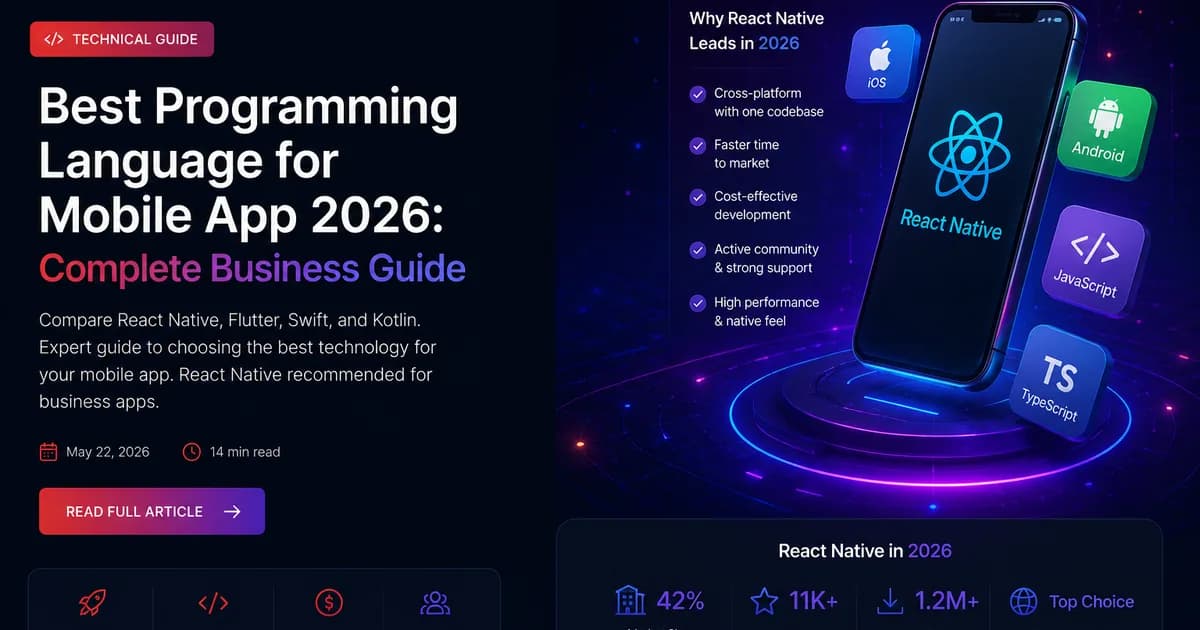
React Native and Flutter can share substantial code across iOS and Android, which is useful for many business products. Native development may be preferable for platform-specific experiences or demanding device integrations. The choice should follow product needs and team capability, not a generic claim that one is always cheaper.
This article belongs to the Mobile App Development Process: From Idea to App Store topic cluster.
- Required devices and operating-system versions
- Native SDK and hardware dependencies
- Performance and offline requirements
- Existing team and codebase
- Release speed and long-term maintenance
What an app proposal should include
Ask for discovery, UX, architecture, development, backend, admin, QA, store submission, analytics, documentation, warranty, and support. Confirm whether third-party fees, Apple and Google accounts, hosting, messaging, maps, and payment fees are separate.
The next related decision is covered in Mobile App Development Process: From Idea to App Store.
Reduce risk with phased delivery
Start with the smallest coherent release, instrument it, and use real behavior to prioritize the next phase. Avoid a large untested specification that takes months before users can provide evidence.
Create an app scope that can be estimated
List user types, core journeys, data, integrations, permissions, notifications, offline behaviour, admin needs, analytics, and platforms. Describe what must happen when a request fails or the device has no connection. Wireframes can help, but the estimate should be based on behaviour and acceptance criteria rather than screen count alone.
Separate the first valuable release from later ideas. A smaller release should still include secure authentication, reliable data handling, store-ready permissions, testing, and operational visibility. Removing quality work to lower the initial price usually creates risk rather than a true saving.
- User roles and journeys
- Backend and admin requirements
- Third-party integrations
- Notifications and background behaviour
- Analytics, security, and store compliance
Backend, admin, and integration costs
Many app estimates focus on the mobile interface while underestimating the systems behind it. Most products need APIs, databases, authentication, file storage, notifications, admin tools, logging, analytics, and support processes. Existing systems may also require integration work, data cleanup, or changes to expose secure APIs.
Clarify which services are included in the proposal and which depend on third-party fees. Ask how environments, secrets, backups, monitoring, and deployment will be managed. Mobile app development cost in Egypt is more predictable when the complete production system is visible from the beginning.
- API and database design
- Admin dashboard
- Authentication and permissions
- Push notifications
- Monitoring and support tools
- External service fees
Testing and store-release responsibilities
Testing should cover devices, operating-system versions, screen sizes, permissions, network conditions, authentication, notifications, deep links, payments, and accessibility. Automated tests help protect critical logic, but manual testing remains important for device behaviour and real user flows.
The contract should state who manages developer accounts, certificates, privacy declarations, screenshots, store listings, review feedback, and release notes. Store approval timing cannot be guaranteed, so the plan should leave room for questions or required changes. After release, monitor crashes, performance, reviews, and funnel events.
- Device and OS test matrix
- Permission and privacy review
- App Store and Play Console ownership
- Crash and analytics monitoring
- Release and rollback process
How phased releases reduce app risk
Begin with discovery and a technical proof for the most uncertain requirement, then build the smallest release that proves the product's main value. Pilot with a controlled group before expanding. This creates evidence about usability, retention, operations, and support while changes are still manageable.
Use later phases for features supported by real behaviour. Keep a product backlog with expected outcome, effort, dependency, and measurement. Phasing does not mean building carelessly; it means investing in the right capability at the right time while preserving a maintainable architecture.
- Validate the riskiest assumption first
- Launch a complete minimum valuable product
- Measure activation and retention
- Prioritise later features by evidence
Questions to ask every app supplier
Ask who owns the source code, cloud accounts, store accounts, design files, and analytics. Request details about architecture, security, testing, documentation, warranty, support, and how changes are estimated. A supplier should be able to explain the operating responsibilities after the app is published.
Compare proposals by scope and risk rather than total price alone. One may exclude the backend, admin dashboard, content entry, store submission, or post-launch support. A clear comparison prevents the project from discovering essential missing work after development has already started.
- What is included in backend and admin work?
- Who owns accounts and repositories?
- How are bugs and changes handled?
- Which devices and flows are tested?
- What support is available after launch?
A mobile product delivery roadmap
Use discovery to define the user problem, first release, backend, admin, analytics, and store requirements. Prototype the hardest interaction or device capability, then build the core journey end to end. Internal testing should begin before every secondary screen is complete so architecture and usability risks surface early.
Pilot with a controlled audience, monitor crashes and funnel events, and collect structured feedback. Store release is a milestone rather than the end of the project. Plan support, dependency updates, privacy declarations, and a prioritised product backlog from the beginning.
- Discovery and technical proof
- Core journey implementation
- Device and operational pilot
- Store release and product iteration
App metrics that justify the next investment
Measure acquisition, successful onboarding, activation, repeated use, task completion, retention, crashes, support requests, and the business outcome the app exists to create. Downloads are useful context but do not prove that users receive value.
Review metrics by version and platform so a release problem is not hidden inside overall averages. Combine analytics with interviews, reviews, and support logs. The next feature should address a verified user or operating problem, not simply increase the number of screens.
- Onboarding and activation
- Core task completion
- Retention and frequency
- Crash-free sessions
- Business outcome
Mobile application scope bands
| Scope | Typical product characteristics | Primary estimation risks |
|---|---|---|
| Focused application | A small number of journeys, limited roles, and standard integrations | Unclear acceptance criteria and store-release requirements |
| Operational application | Accounts, notifications, payments, dashboards, or back-office workflows | Integration reliability, data migration, permissions, and QA |
| Platform product | Multiple roles, complex data, automation, analytics, and continuous roadmap | Product discovery, scalability, security, operations, and long-term ownership |
Questions and checks before you commit
What clients highlighted
“The app scope became much clearer after discovery. We understood what should go into the first release and what should wait.”
“The website finally explains our services clearly, loads fast, and gives our team a cleaner way to receive qualified enquiries.”
Relevant Nova Roids project work
These case studies show related delivery experience. They do not imply that every feature discussed in this guide was used on every project.
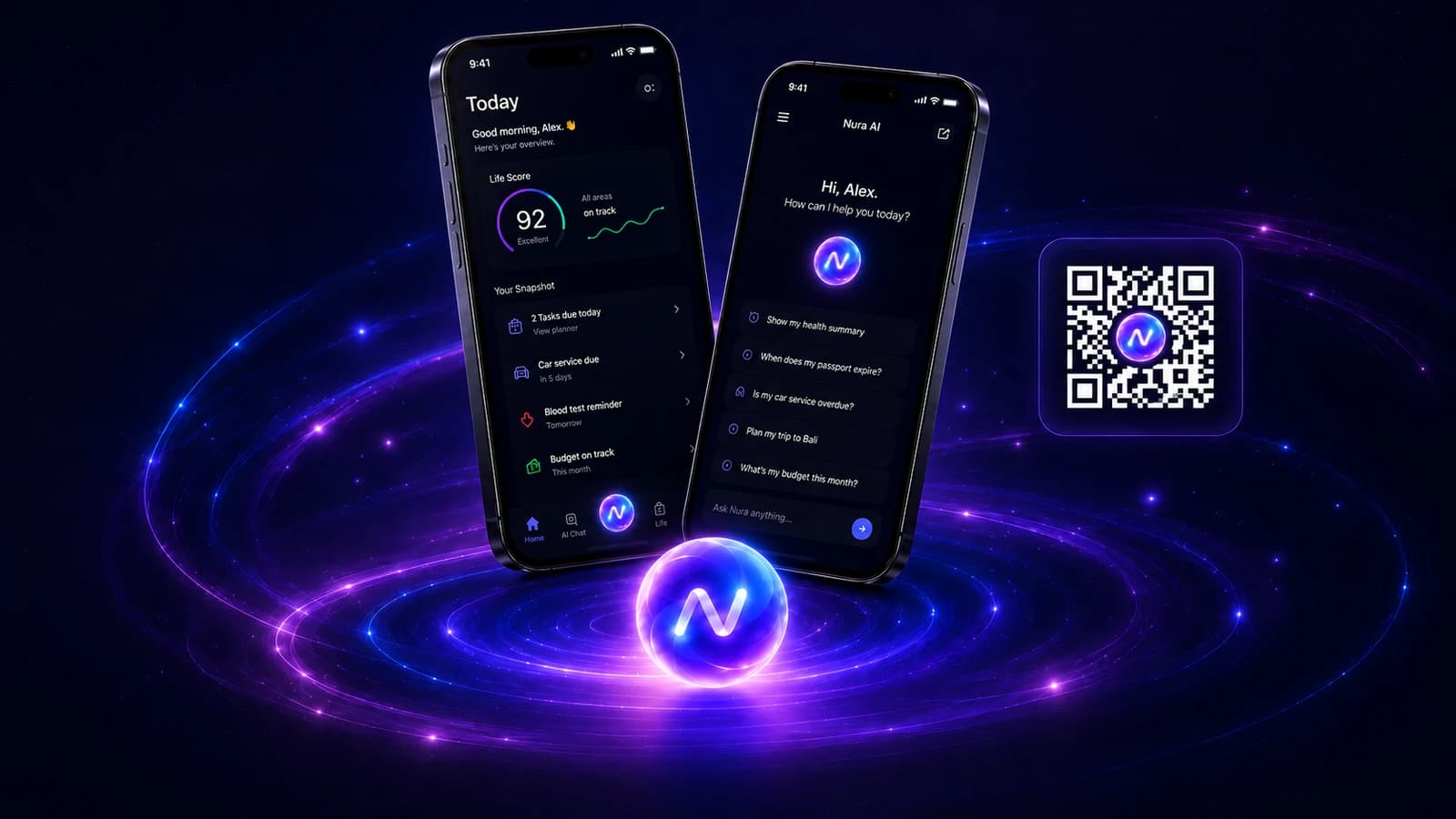
Nura AI Life Assistant
A personal AI life assistant for natural chat and voice, tasks, reminders, files, expenses, memory controls, and connected everyday context.

PetCare+ Pet Care Platform
A mobile pet-care platform combining pet profiles, care tasks, bookings, notifications, and an AI Vet entry point with a connected digital growth system.
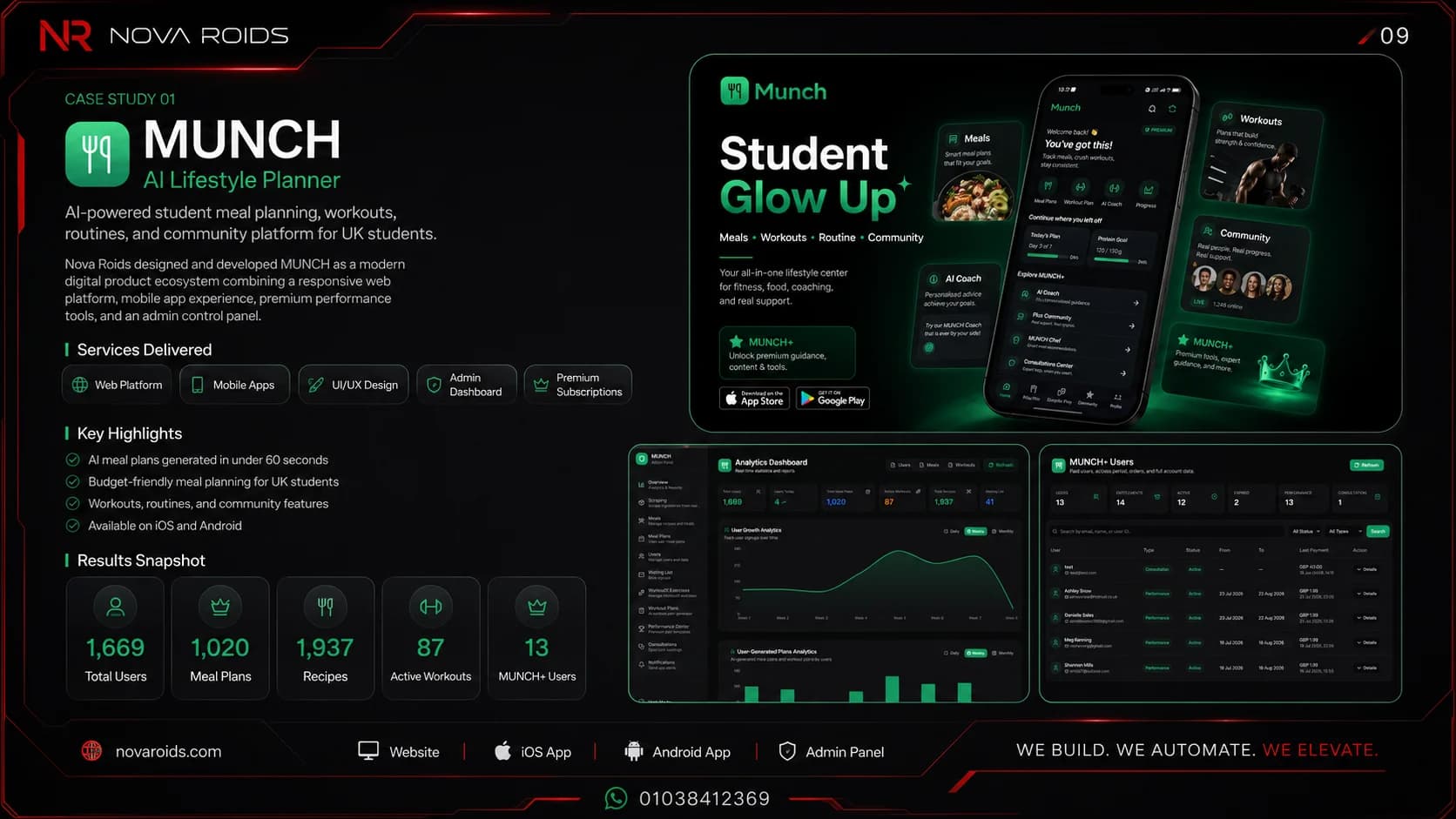
MUNCH AI Lifestyle Platform
An AI-powered mobile and web ecosystem for meal planning, workouts, performance tracking, community, and student lifestyle management.
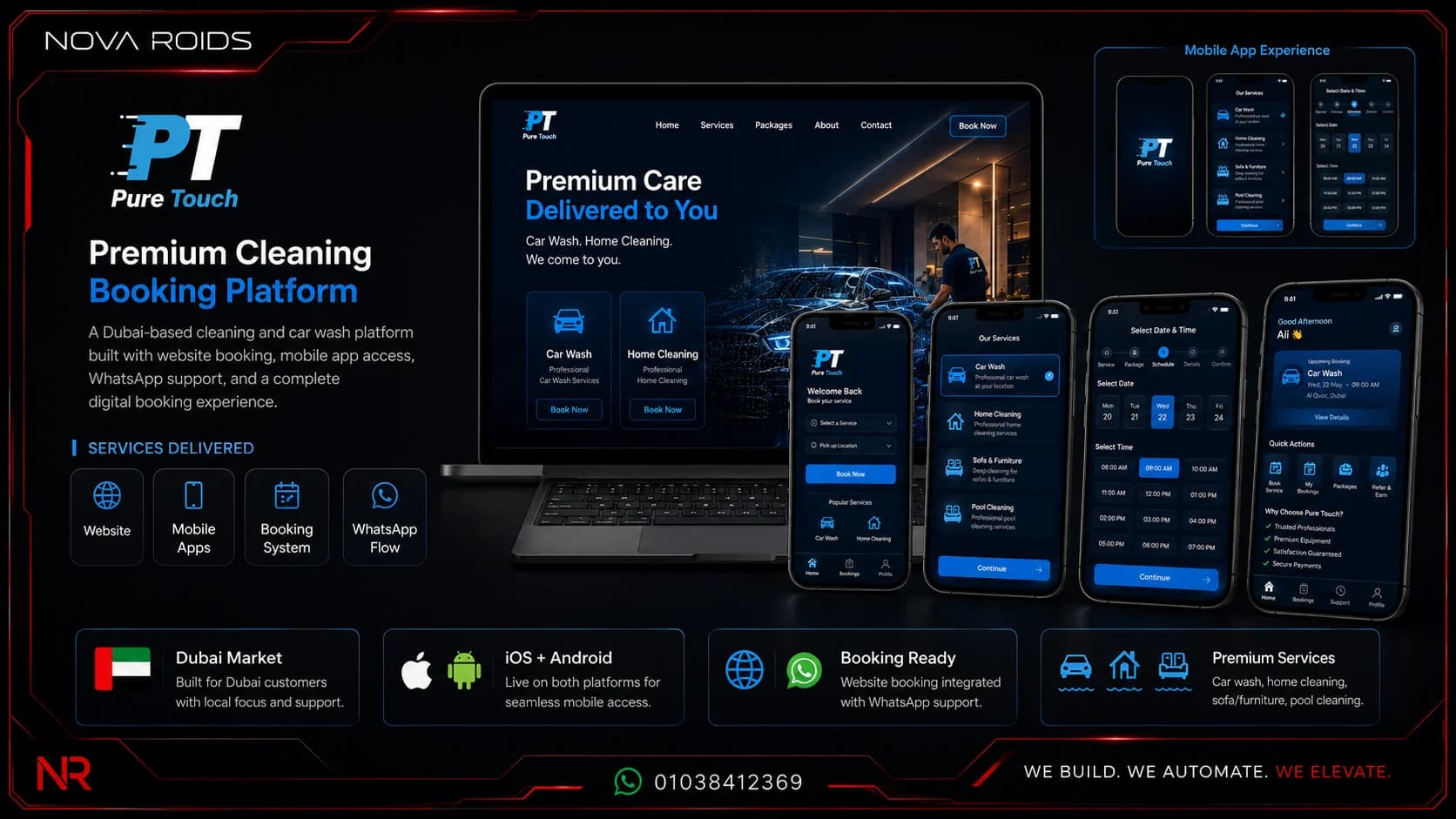
Pure Touch Booking Ecosystem
A premium UAE booking platform for mobile car wash, home cleaning, pool care, locations, packages, and booking operations.
Frequently asked questions
How much does mobile app development cost in Egypt?+
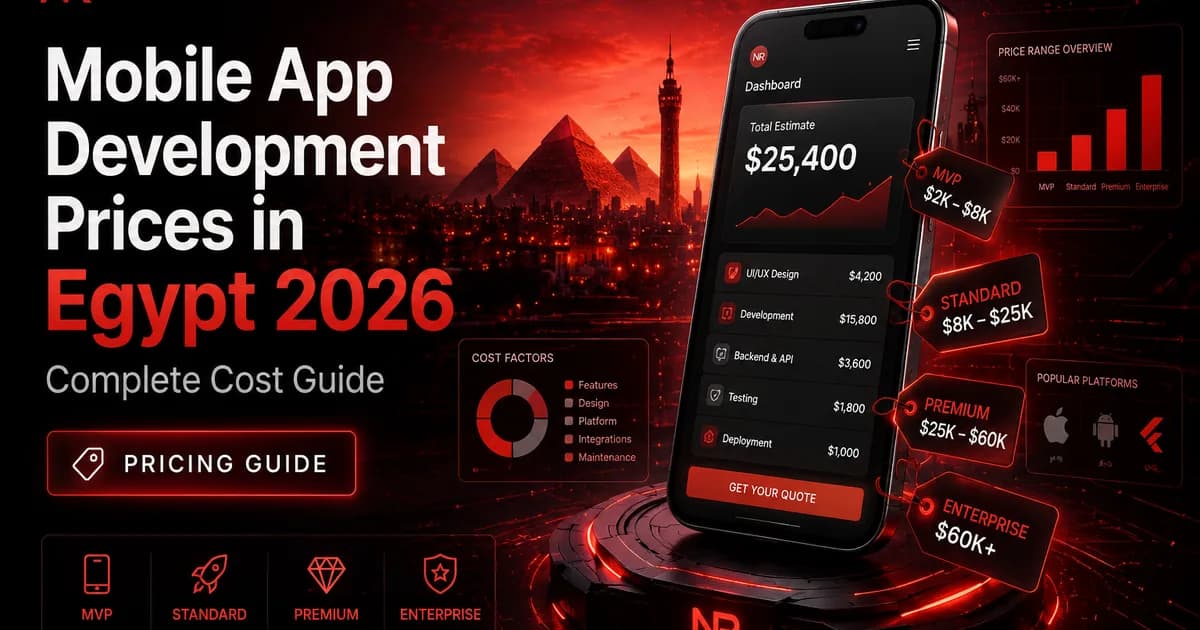
The amount varies with platforms, UX, backend, integrations, admin tools, security, and support. A useful estimate requires a feature map and clear release scope.
Is React Native suitable for a serious app?+
Yes for many production applications. Suitability depends on performance requirements, native SDKs, team expertise, and product roadmap rather than company size alone.
What recurring costs should I expect?+
Recurring costs can include hosting, databases, storage, messaging, maps, analytics, payment services, store accounts, monitoring, maintenance, and customer support.
Can I get an exact mobile app development cost Egypt estimate without a detailed brief?+
A precise estimate normally requires the intended users, core journeys, content, integrations, languages, ownership requirements, and launch constraints. Without that information, any figure should be treated as an early planning range rather than a committed quotation.
What should a professional mobile app development cost in egypt estimate include?+
It should define deliverables, exclusions, assumptions, milestones, content responsibilities, testing, deployment, warranty, recurring costs, source-code ownership, and the process for approving changes. This makes competing proposals easier to compare and reduces scope disputes.
Author and technical review
Primary references
Need a scoped recommendation instead of a generic answer?
Share the current system, target users, required outcomes, and deadline. The Nova Roids team will identify the smallest practical next step and the assumptions that need validation.