Key takeaways
- A Cairo online store should be scoped around products, payment states, delivery zones, returns, customer support, analytics, and content ownership before design starts.
- This page owns build-and-launch intent in Cairo; the existing Egypt e-commerce pillar owns the national topic and the existing pricing pages own cost intent.
- The fastest route to qualified leads is a mobile-first store with clear product architecture, resilient checkout, local payment and delivery logic, and measurable WhatsApp or order conversions.
- Nova Roids project evidence on this page shows real e-commerce and web delivery work; it is used as proof of execution, not as a claim that every feature was used in every project.
How this guide was prepared
This guide targets Cairo-specific online-store build intent and intentionally excludes exact pricing and mobile shopping-app intent to protect query ownership.
Keyword selection uses the supplied Nova Roids Search Console export, current live SERP checks, existing page inventory, and first-party project records linked from the site.
What this page owns—and what it deliberately excludes
This is the canonical page for the online store development Cairo query family. It answers the specific decision below without duplicating the service page or adjacent cluster articles.
Topics intentionally handled elsewhere
- Exact e-commerce website pricing in Egypt
- National e-commerce website development overview
- Mobile shopping app development intent
Direct service and enquiry intent belongs to our E-commerce Development service page.
The broader topic is covered by E-commerce Website Development in Egypt: Build for Local Buyers.
What online store development in Cairo should include before design begins
If you are searching for online store development in Cairo, you are usually past the idea stage. You need a store that can accept real orders, support the way your team fulfils them, and give customers enough confidence to buy from a phone. The practical starting point is not a theme. It is a written operating model covering products, variants, stock, delivery, payment, returns, support, promotions, customer accounts, and reporting.
Cairo also creates operational questions that generic e-commerce templates do not answer for you. Which areas do you deliver to? Are delivery fees fixed, zoned, or calculated by a partner? Does the team confirm cash-on-delivery orders? What happens when online payment succeeds but the customer closes the browser? These rules belong in the product specification because they affect checkout, admin states, notifications, and analytics.
Ready to move from planning to delivery? Review our e-commerce development process and deliverables.
- Define the catalogue and variant model
- Map payment, confirmation, fulfilment and return states
- Decide delivery zones and fee rules
- Assign who owns products, orders and customer support
- Specify analytics events before launch
Separate the store-build decision from the store-cost decision
This guide deliberately does not compete with the existing pricing intent on Nova Roids. A user asking how much an online store costs needs a pricing framework. A user searching for online store development Cairo needs to understand what should be built, which decisions change the architecture, and how to evaluate a team. Keeping those intents on separate URLs gives Google and readers a clearer answer.
Budget still matters, but the useful way to discuss it here is through scope drivers: catalogue complexity, custom design, multilingual content, payment gateways, shipping integrations, user roles, marketplace logic, ERP or CRM connections, analytics, and post-launch support. Once those are known, a quotation can be compared against the same deliverables instead of a vague package name.
This article belongs to the E-commerce Website Development in Egypt: Build for Local Buyers topic cluster.
Choose the commerce platform after the workflow is clear
Shopify, WooCommerce, and custom commerce can all be valid. The wrong decision is choosing a platform before documenting the workflow. A standard catalogue with simple fulfilment may benefit from a hosted platform. A content-heavy brand may value WordPress flexibility. A business with unusual pricing, multi-vendor roles, complex inventory, or internal integrations may justify a custom architecture.
Evaluate ownership as well as features. Ask who controls the domain, hosting, source code where applicable, analytics, payment accounts, product data, media, and third-party subscriptions. A store is an operational asset. Your business should not depend on one developer's private account to keep checkout or order management running.
The next related decision is covered in E-commerce Website Development in Egypt: Build for Local Buyers.
Design mobile product discovery before polishing the homepage
Most failed store journeys are not fixed by a prettier hero section. Customers need to find the right product, understand the difference between options, see price and availability, trust delivery and return terms, and move through checkout without losing context. Build category architecture, filters, search, product cards, product-detail information, cart states, and checkout first; then use the homepage to route visitors into those journeys.
For SEO, important categories need stable crawlable URLs, useful headings, unique supporting copy, relevant internal links, descriptive image alt text, and structured product information where appropriate. Avoid generating thousands of indexable filter combinations that repeat the same products. The goal is not more URLs; it is clearer ownership for the searches that matter.
Plan Egyptian payment and cash-on-delivery states as separate workflows
An order placed, a payment initiated, and a payment confirmed are different events. The backend should verify gateway callbacks and update order state independently of the browser redirect. Cash on delivery may require a confirmation stage before fulfilment. Refunds, cancellations, delivery failures, and reconciliation also need explicit states so customers and staff see the same truth.
The same discipline applies to WhatsApp. A strong WhatsApp CTA can capture people who need help before ordering, but it should be tracked separately from completed checkout. That lets you see whether visitors need product advice, have payment concerns, or simply prefer assisted selling.
Build a Cairo delivery model that operations can actually manage
Delivery logic should match the real service area instead of using a generic city dropdown. Define the zones the business can fulfil reliably, the information required from the customer, any cut-off or scheduling rules, and what staff need to do when an address is incomplete. If a shipping partner is integrated, document which system is the source of truth for status and fees.
Keep the customer-facing language clear. Show delivery expectations and return rules before the final checkout action rather than hiding them after payment. This reduces support pressure and helps customers make a confident decision without leaving the store to ask basic questions.
Use real project evidence to evaluate an e-commerce development team
A useful portfolio review goes beyond screenshots. Open the live experience when available, test mobile navigation, inspect product and checkout journeys, and ask what the delivery team actually owned. On Nova Roids, projects such as Godetia Beauty, Petyard Stores, Optivn, and Pure Touch are linked as project evidence so you can inspect the type of work rather than relying on generic capability statements.
Project evidence should still be interpreted carefully. A project card proves that the team worked on that project and service mix shown in the portfolio; it does not mean every payment provider, feature, or architecture discussed in this article was implemented on that exact project. That distinction keeps the guide useful without inventing case-study details.
Instrument the store before launch so marketing spend is measurable
Before ads begin, define events for category views, product views, search, add to cart, checkout start, payment result, order confirmation, WhatsApp contact, and qualified lead submission. Confirm the analytics identifiers and ad-platform pixels belong to the business. Test events on real mobile devices and check that duplicate callbacks do not inflate conversions.
After launch, diagnose the constraint instead of changing everything at once. If product views are weak, acquisition or navigation may be the problem. If carts are healthy but checkout completion is weak, investigate trust, forms, payment and delivery expectations. If orders are strong but fulfilment fails, operations—not design—needs attention.
A practical launch sequence for an online store in Cairo
Start with discovery and a written scope, then lock information architecture and checkout rules before visual design. Build the storefront and admin workflows together so operational edge cases are found early. Populate a representative set of products, test every payment and delivery path, configure analytics and search metadata, then run a controlled pre-launch test before scaling traffic.
If you already have a store, the first step may be a redesign or conversion audit rather than a rebuild. Share the current URL, product catalogue size, pain points, payment and delivery setup, and the business goal. A scoped review is more useful than replacing technology without evidence.
Online store build decision table
| Decision | Questions to answer | Why it matters |
|---|---|---|
| Catalogue | Products, variants, stock source, languages | Shapes data model, navigation and admin |
| Payments | Online payment, COD, refunds, reconciliation | Defines checkout and order states |
| Delivery | Zones, fees, partner integration, failed delivery | Defines customer promise and operations |
| Platform | Hosted, WooCommerce or custom | Changes flexibility, ownership and maintenance |
| Measurement | Orders, WhatsApp, checkout events, attribution | Makes marketing and CRO decisions measurable |
Questions and checks before you commit
What clients highlighted
“The checkout, product pages, and tracking plan felt practical from day one. It was built around real operations, not just design screens.”
“The website finally explains our services clearly, loads fast, and gives our team a cleaner way to receive qualified enquiries.”
Relevant Nova Roids project work
These case studies show related delivery experience. They do not imply that every feature discussed in this guide was used on every project.
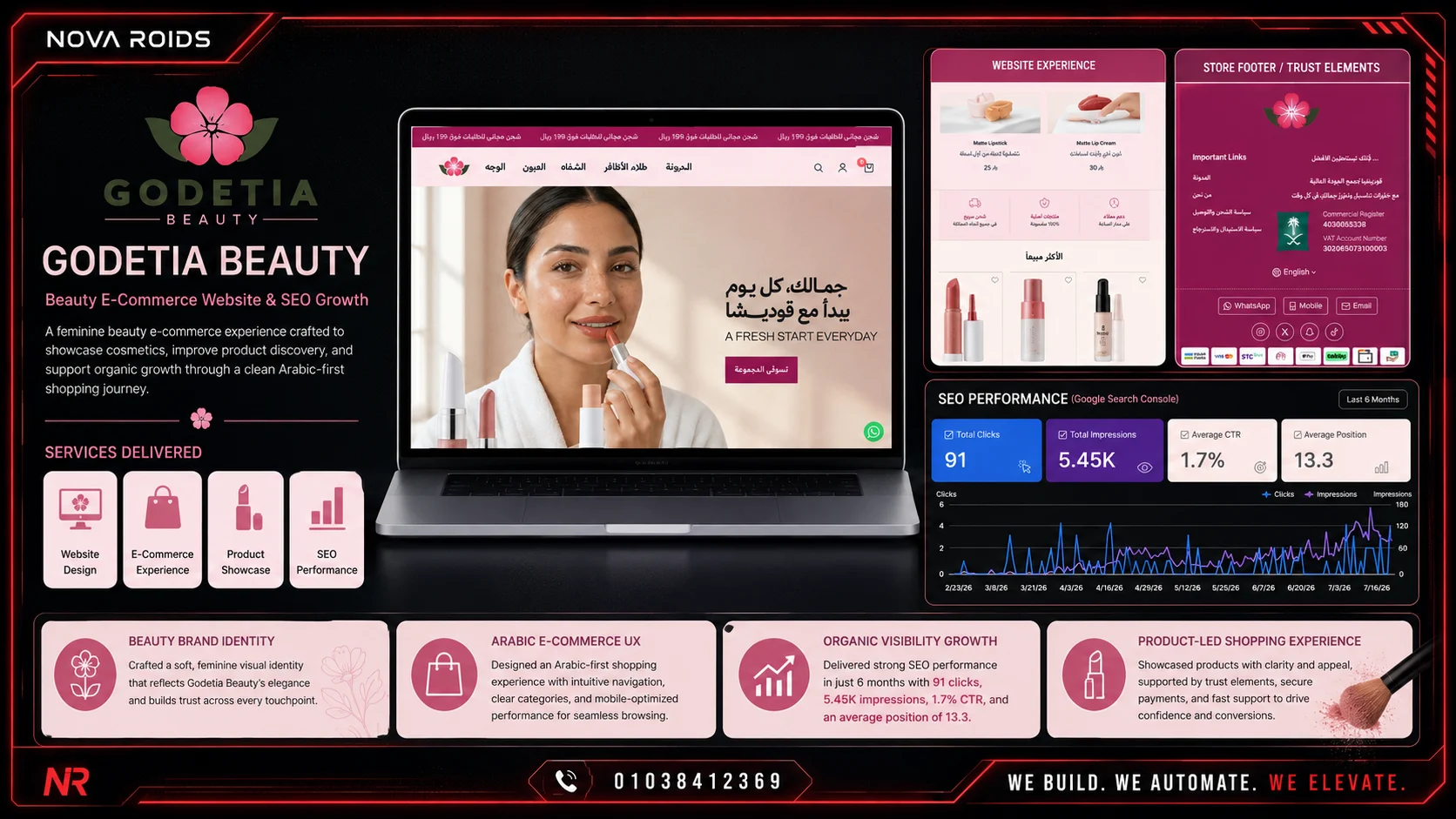
Godetia Beauty Commerce Growth
A Saudi beauty commerce ecosystem combining product discovery, editorial content, search growth, and conversion-focused journeys.
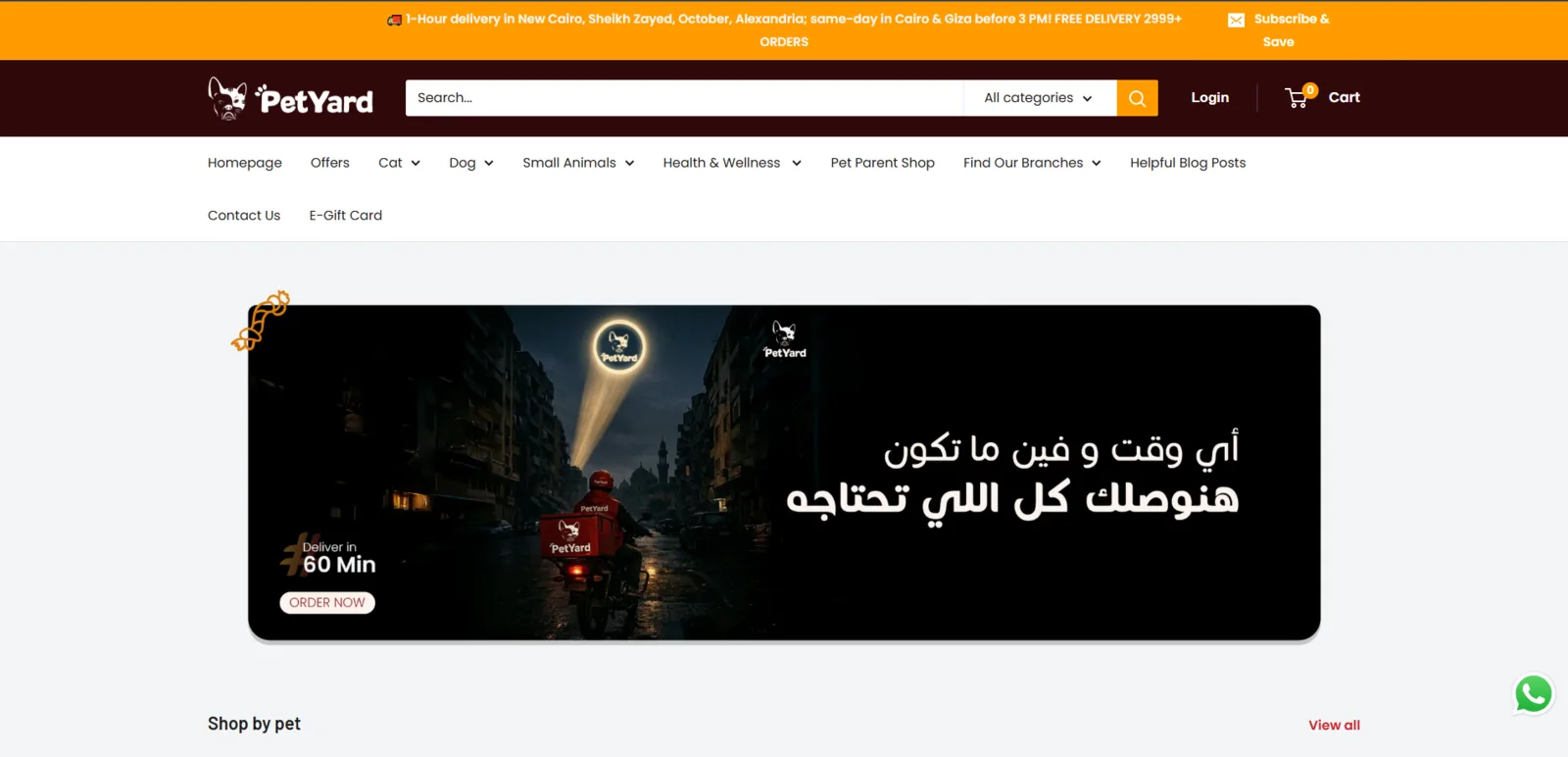
Petyard E-commerce Store
A pet retail experience with searchable catalog structure, product discovery, commerce operations, and organic visibility foundations.
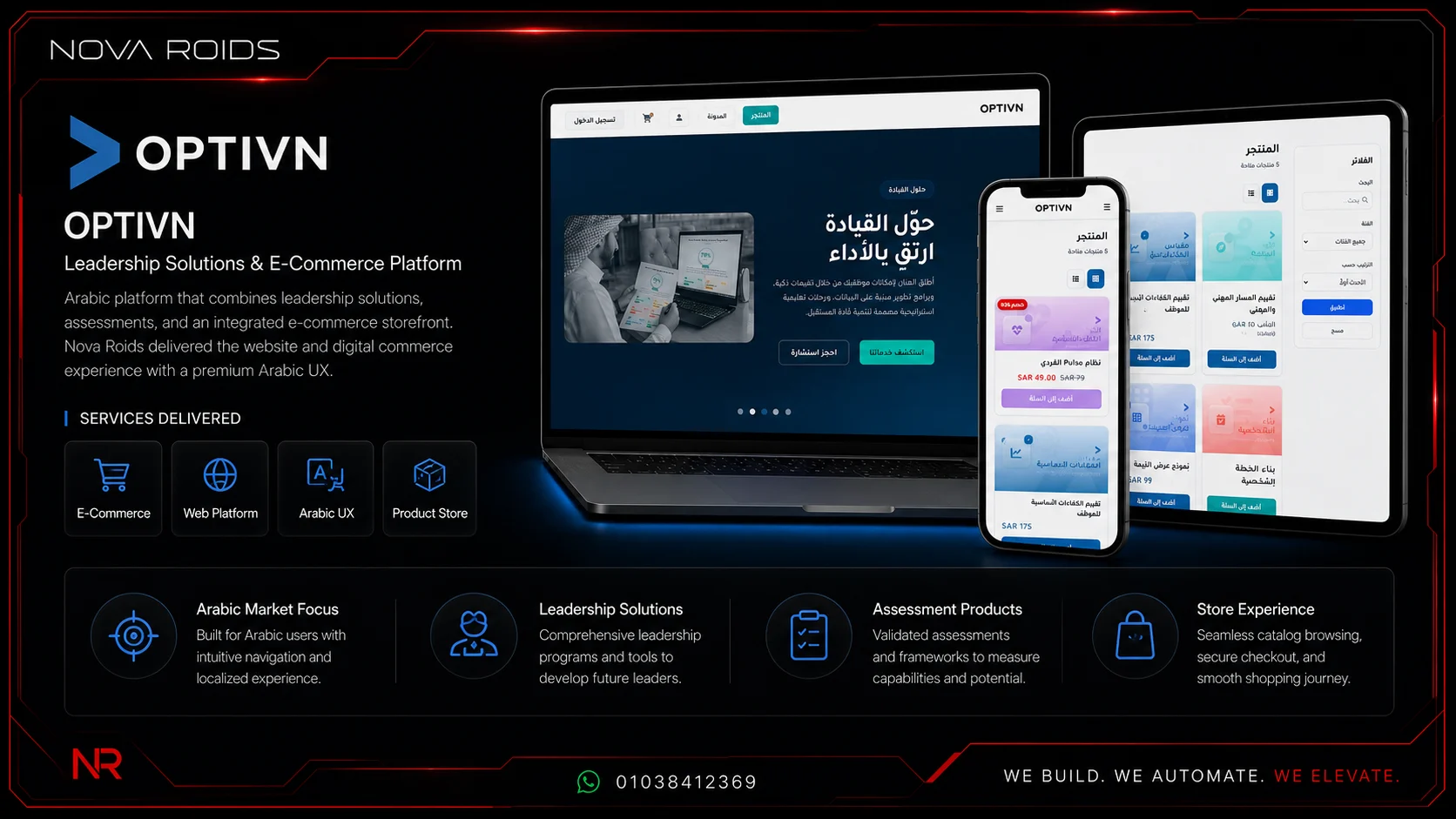
Optivance Leadership Platform
A bilingual leadership, assessment, consulting, and digital-products platform built for Gulf organizations and professionals.
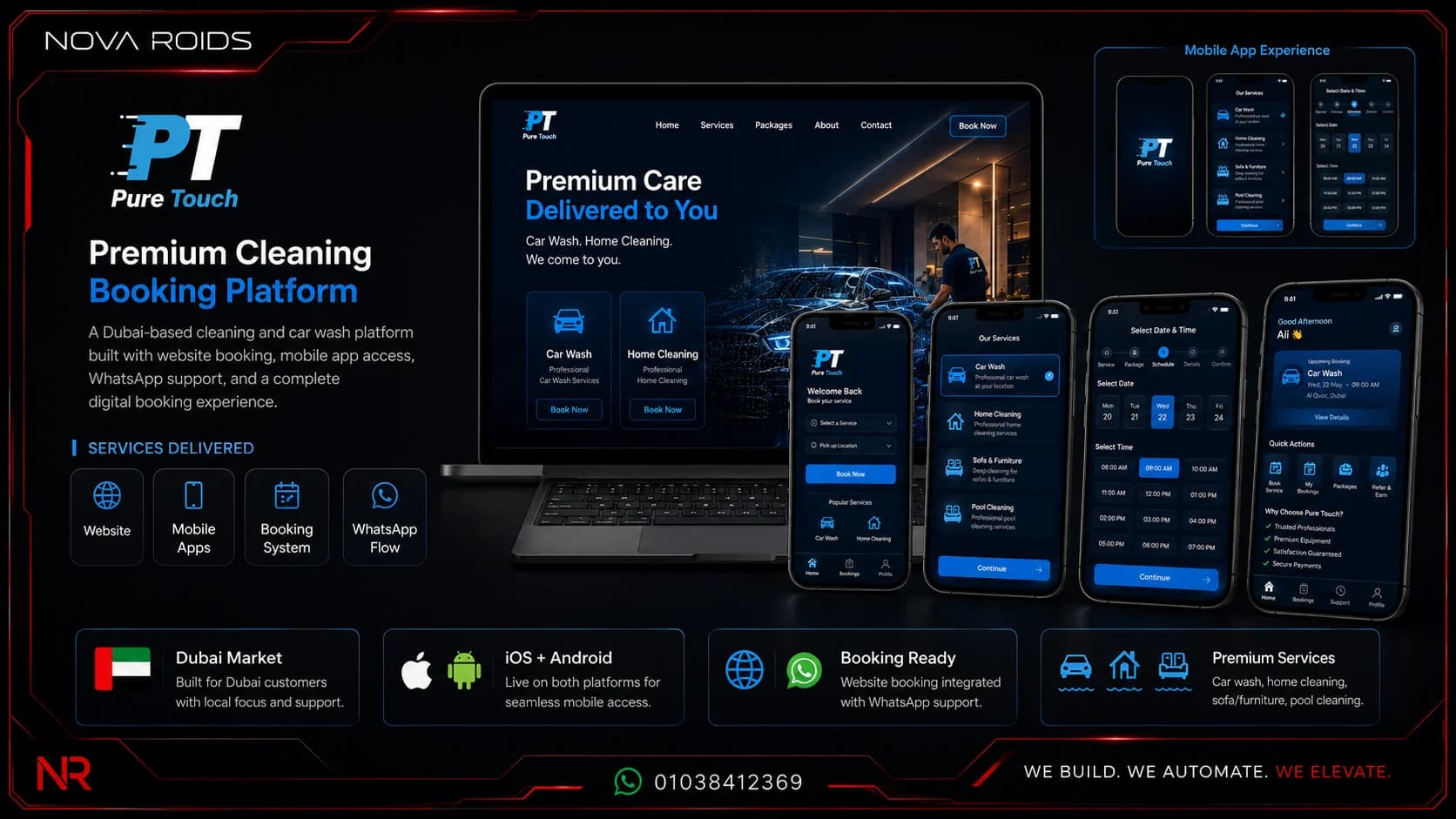
Pure Touch Booking Ecosystem
A premium UAE booking platform for mobile car wash, home cleaning, pool care, locations, packages, and booking operations.
Frequently asked questions
What should online store development in Cairo include?+
It should include catalogue architecture, mobile product discovery, checkout, payment states, delivery rules, order management, returns, customer support, analytics, SEO foundations, security, and clear ownership of accounts and data. The exact scope depends on the operating model rather than a fixed package.
Is this the same as an e-commerce website cost guide?+
No. This page owns Cairo-specific build and launch intent. Pricing is handled separately because a cost query needs scope drivers and quotation logic, while this guide focuses on what to build and how to evaluate delivery quality. Keeping the intents separate reduces internal keyword competition.
Should a Cairo store use Shopify, WooCommerce or custom development?+
Choose after documenting catalogue, payment, delivery, integrations, roles and growth requirements. Standard workflows may fit a hosted platform; content-led stores can suit WooCommerce; unusual operations or integrations may justify custom commerce. The platform should follow the workflow, not the other way around.
Can an online store use WhatsApp as a conversion path?+
Yes. WhatsApp can support assisted selling, product questions and high-consideration purchases, but it should be tracked as a separate conversion from checkout. The store still needs clear product information, payment and delivery rules so WhatsApp does not become a workaround for missing UX.
How do I get a quote from Nova Roids for an online store in Cairo?+
Send the current website if one exists, approximate catalogue size, required payment and delivery methods, target launch window, languages, integrations and any existing brand assets. Nova Roids can then ask the right discovery questions and scope a practical next step instead of guessing from a generic package.
Author and technical review

Primary references
Planning an online store in Cairo?
Send your catalogue size, payment and delivery requirements, current URL if any, and target launch date. The Nova Roids team will help identify the right scope and the risks to resolve first.