Key takeaways
- A shopping app is an operational system, not a mobile copy of an e-commerce website: catalogue, identity, cart, payment, delivery, notifications, admin and analytics must share consistent states.
- This page owns e-commerce mobile-app intent; the existing e-commerce website pillar owns web-store intent and mobile pricing keeps generic app cost intent.
- Start with the order lifecycle and data source of truth, then design the app around fast product discovery and reliable checkout on real devices.
- Use linked Nova Roids commerce and mobile projects as execution evidence while keeping feature claims limited to what the public portfolio actually supports.
How this guide was prepared
This article targets mobile shopping-app intent and excludes e-commerce website and generic app-price intent so each Nova Roids URL has a separate canonical search job.
The topic was selected from supplied GSC e-commerce/mobile demand, current Egypt SERPs, existing Nova Roids page ownership, and relevant first-party mobile/e-commerce projects.
What this page owns—and what it deliberately excludes
This is the canonical page for the ecommerce app development Egypt query family. It answers the specific decision below without duplicating the service page or adjacent cluster articles.
Topics intentionally handled elsewhere
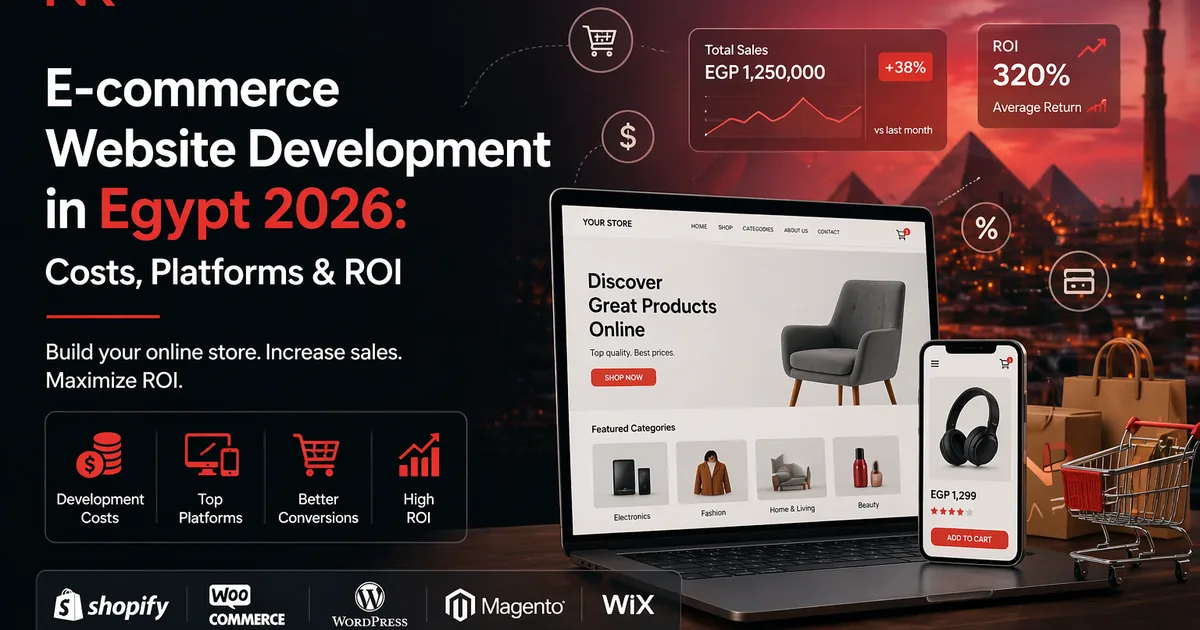
- E-commerce website development in Egypt
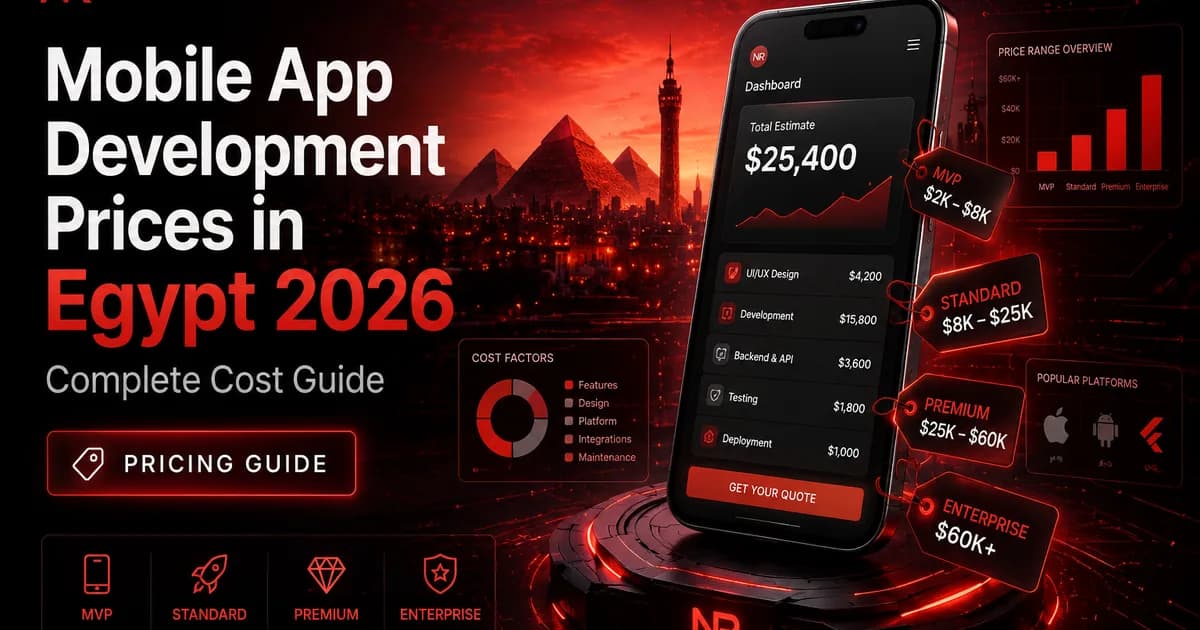
- Generic mobile app cost in Egypt
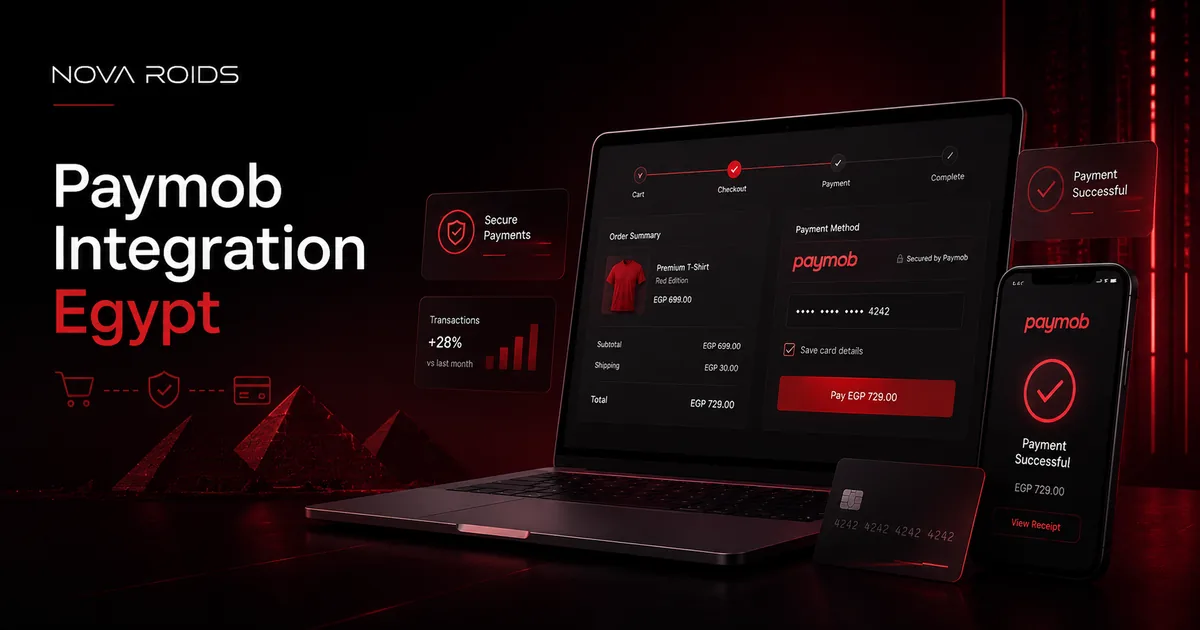
- Paymob-only integration intent
Direct service and enquiry intent belongs to our Mobile App Development service page.
The broader topic is covered by Mobile App Development Process: From Idea to App Store.
Decide whether you need an e-commerce app at all
E-commerce app development in Egypt should start with a business case, not the assumption that every store needs an app. If customers buy infrequently and mostly arrive from search or ads, a fast mobile website may be the better first investment. An app becomes more compelling when repeat purchase, logged-in experiences, saved preferences, loyalty, push notifications, location, device capabilities, or a high-frequency marketplace journey create real value.
Write the reason a customer would install and keep the app. If the only answer is 'our website but in an icon', reconsider the scope. The strongest mobile-commerce products reduce friction for repeat behaviour or unlock an experience the web version cannot deliver as effectively.
Ready to move from planning to delivery? Review our mobile app development process and deliverables.
Keep app intent separate from e-commerce website development
Nova Roids already has a national e-commerce website pillar. That page owns browser-based store planning. This cluster owns the mobile product: iOS/Android installation, app sessions, push notifications, mobile permissions, deep links, store releases and device QA. The store and app can share a backend, but search intent and delivery risk are not the same.
This separation also prevents a common SEO mistake: publishing two pages that both try to rank for the broad phrase 'ecommerce development Egypt'. The website page keeps the website query; this page repeatedly signals mobile shopping app intent through its title, metadata, headings, schema entities, proof and internal anchors.
This article belongs to the Mobile App Development Process: From Idea to App Store topic cluster.
Design one source of truth for catalogue, price, stock and orders
Before the first mobile screen is built, decide where products, variants, prices, promotions, stock, customer records and order states live. If a website already exists, the app should not create a second disconnected catalogue unless there is a deliberate synchronization strategy. Duplicate manual data becomes inconsistent quickly and creates customer-service problems.
Define the API contract around operations, not screens. The app needs predictable responses for product lists, product details, availability, cart validation, address rules, checkout, payment state and order history. Admin teams need the reverse: tools to update data and resolve exceptions without asking a developer for every change.
The next related decision is covered in E-commerce Website Development in Egypt: Build for Local Buyers.
Build mobile product discovery for speed and thumb-friendly decisions
Mobile commerce lives in limited screen space. Categories, search, filters, product media, variant selection, price, availability and primary actions need a clear hierarchy. Avoid copying desktop mega-menus into an app. Test the journey with realistic catalogues and long product names, out-of-stock variants, discounts, missing images and slow connections.
Deep links should take customers from campaigns, notifications or shared links to the relevant product or category when the app is installed, with a sensible web fallback when it is not. This is an acquisition and retention feature, not a final polish item.
Treat payment as a verified backend process
The mobile app can start a payment flow, but the backend should decide whether an order is paid. Redirect success screens are not a reliable source of truth. Use verified provider callbacks and idempotent order logic so retries or repeated network requests do not create duplicate charges or orders.
Cash on delivery is also a workflow, not just a payment label. You may need confirmation, fraud checks, delivery assignment, cancellation and failed-delivery states. Define them alongside online payments so reporting and customer order history remain coherent.
Connect delivery, notifications and customer support to the order lifecycle
Notifications should be triggered by meaningful state changes: order accepted, payment confirmed, fulfilment progress, delivery updates, cancellation or refund. Avoid using push notifications as a substitute for correct in-app order status. Customers should be able to reopen the app and see the same state the support team sees.
For assisted selling, WhatsApp can sit beside in-app support for high-consideration orders. Track those contacts so you know which product pages or checkout steps produce questions. If every buyer leaves the app to ask about delivery or returns, the product is signalling missing information.
Plan the admin dashboard as part of the e-commerce app
The customer app is only half the system. Operations may need product management, stock updates, order queues, status changes, refunds, promotions, delivery assignment, customer support notes and reporting. Permissions matter when sales, warehouse and support roles should not have the same access.
Design the dashboard around real tasks and exception handling. A staff member should be able to understand why an order is blocked, what payment state was received, which address was submitted, and what action is safe next. Good operations UX prevents the mobile app from becoming dependent on spreadsheets and developer interventions.
Measure acquisition, checkout and retention without inflating conversions
Instrument the funnel from app install or first open through product discovery, add to cart, checkout, payment, order confirmation and repeat purchase. Use consistent event names and avoid firing a purchase event before the backend confirms the order state. For campaign measurement, define deep-link and attribution behaviour before launch rather than bolting it on after ads begin.
Retention metrics should match the business model. A weekly grocery or pet-supply app may care about repeat purchase and saved baskets; a luxury purchase app may have a different cycle. The analytics plan should answer business questions, not simply collect every possible event.
Release the shopping app with real-device and operational testing
Test account creation, login expiry, cart persistence, payment interruptions, retries, notifications, deep links, address entry, image loading, empty states and order history across the devices you support. Run full end-to-end orders in a staging environment and then controlled production tests with real provider accounts where safe.
Store submission requires privacy disclosures, screenshots, metadata, signing and review readiness. Keep the Apple and Google accounts under business control, plan versioning and over-the-air or release processes where the stack supports them, and define how urgent fixes are handled after launch.
Use project proof to decide if a team understands both commerce and mobile
A strong e-commerce app team should be able to discuss both sides of the product: mobile UX and commerce operations. Review mobile products for release quality and review commerce projects for catalogue, checkout and operational thinking. Nova Roids links relevant mobile and commerce work on this page so prospects can inspect the portfolio before contacting the team.
During discovery, share any existing website, ERP, inventory source, payment provider, customer database and brand assets. The team can then identify what should be reused, what needs an API, and which assumptions must be validated before a reliable estimate is possible.
Website vs shopping-app decision
| Question | Mobile website first | E-commerce app justified |
|---|---|---|
| Purchase frequency | Occasional or search-led purchase | Frequent repeat purchase or logged-in use |
| Retention | Email/remarketing is sufficient | Push, saved state or loyalty adds real value |
| Device features | No meaningful native requirement | Camera, location, biometrics or deep integration matters |
| Operations | Existing web flow already works | Shared backend can support app-specific journeys |
Questions and checks before you commit
What clients highlighted
“The checkout, product pages, and tracking plan felt practical from day one. It was built around real operations, not just design screens.”
“The app scope became much clearer after discovery. We understood what should go into the first release and what should wait.”
Relevant Nova Roids project work
These case studies show related delivery experience. They do not imply that every feature discussed in this guide was used on every project.
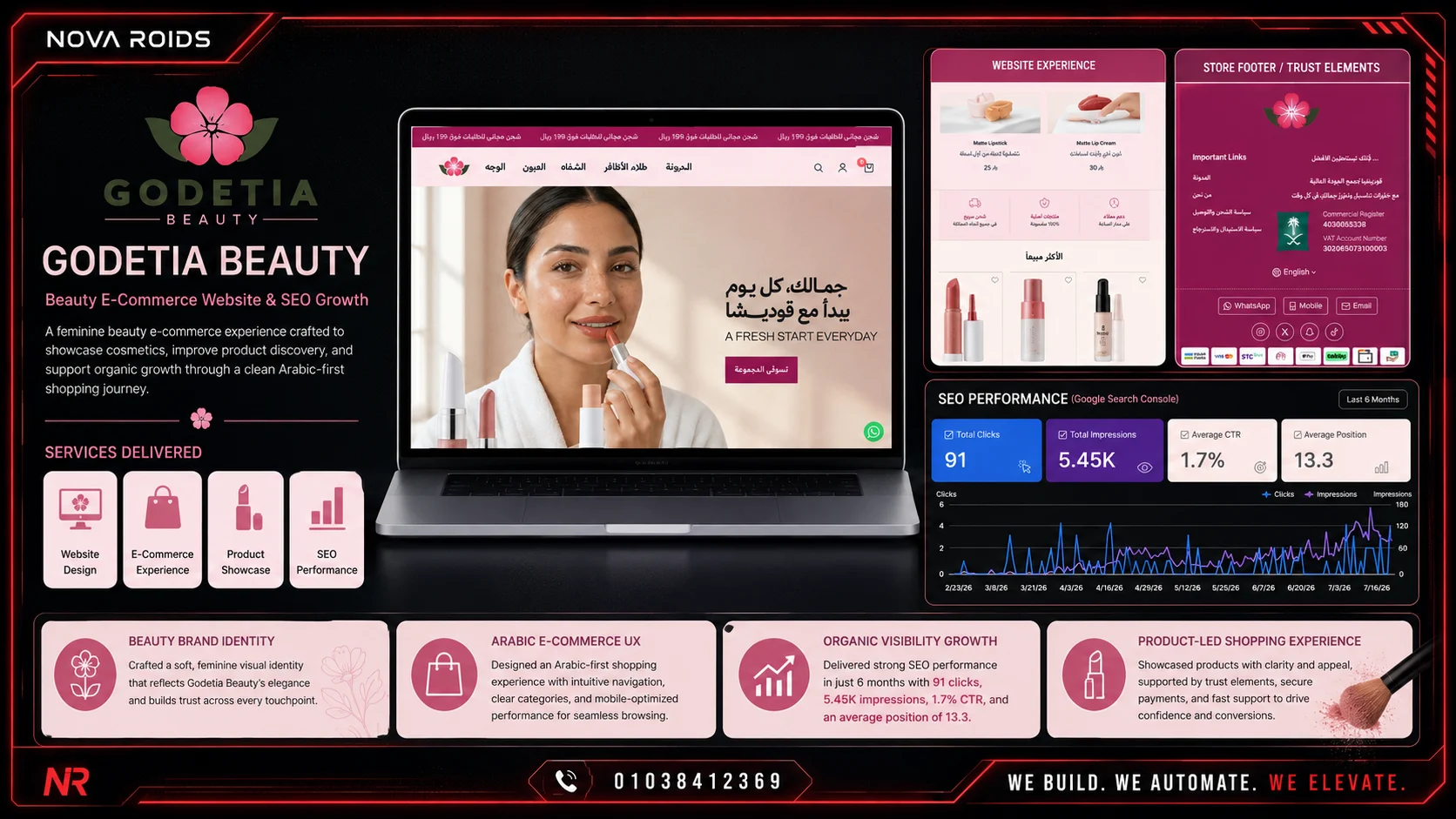
Godetia Beauty Commerce Growth
A Saudi beauty commerce ecosystem combining product discovery, editorial content, search growth, and conversion-focused journeys.
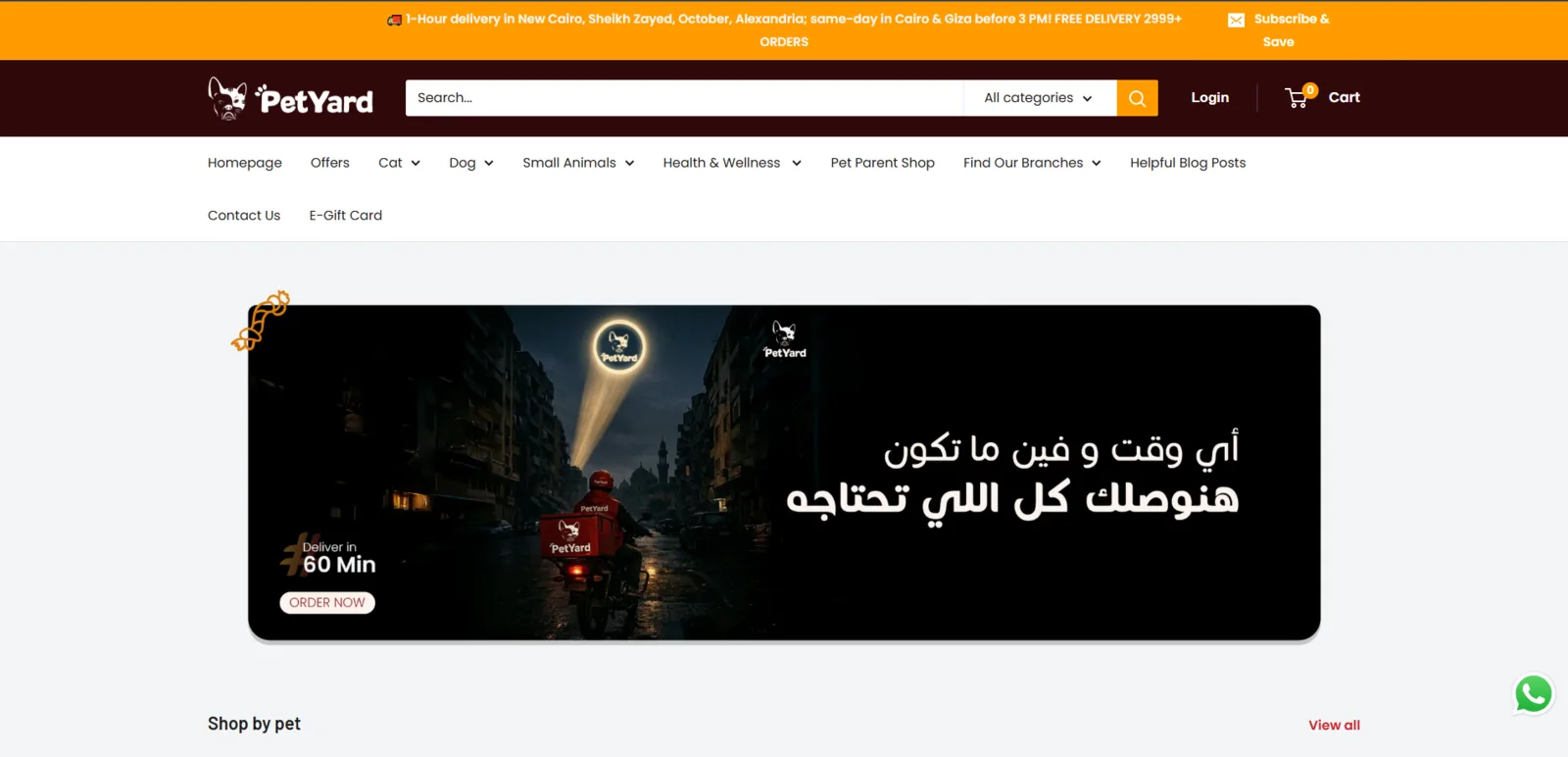
Petyard E-commerce Store
A pet retail experience with searchable catalog structure, product discovery, commerce operations, and organic visibility foundations.
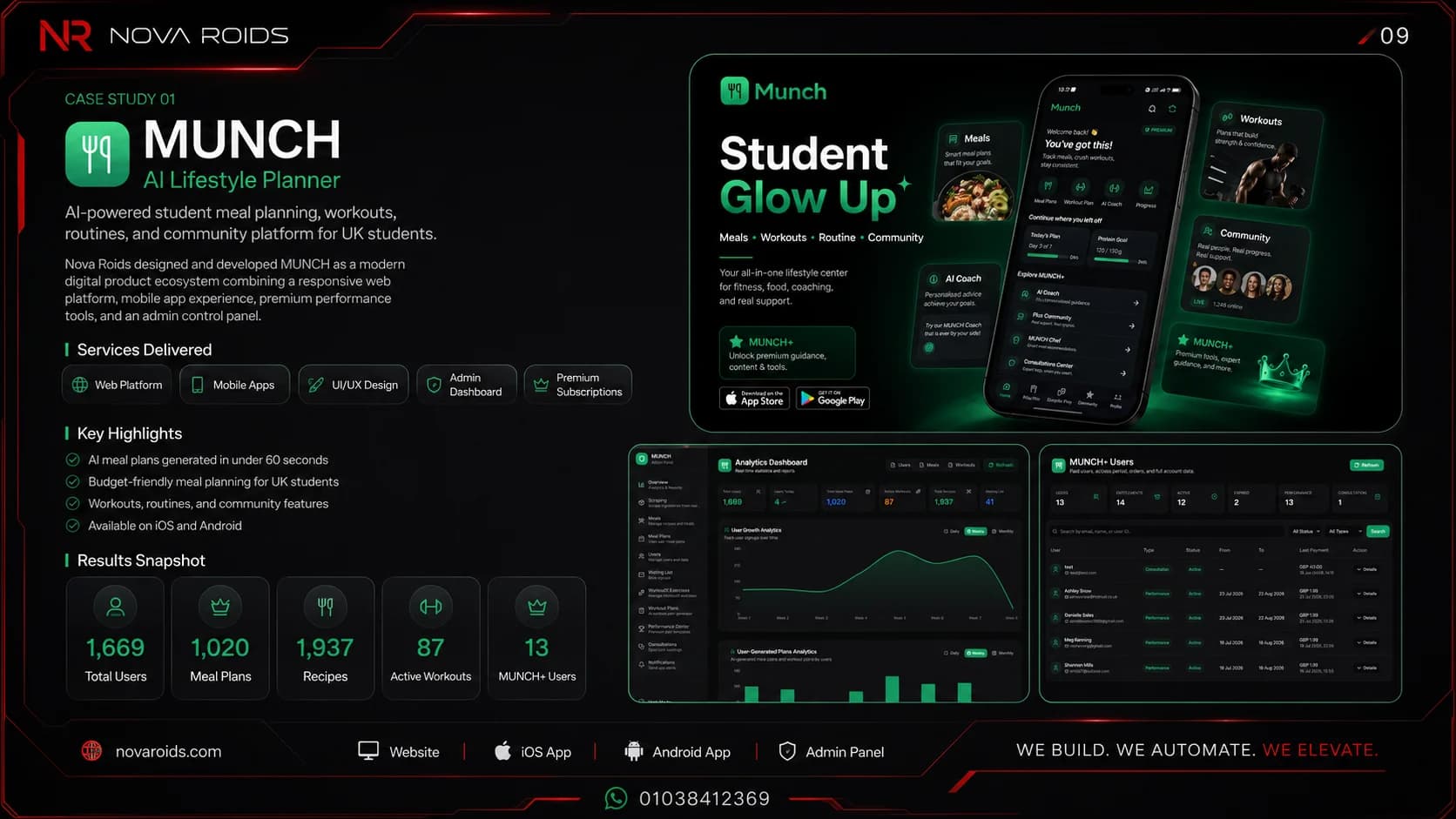
MUNCH AI Lifestyle Platform
An AI-powered mobile and web ecosystem for meal planning, workouts, performance tracking, community, and student lifestyle management.
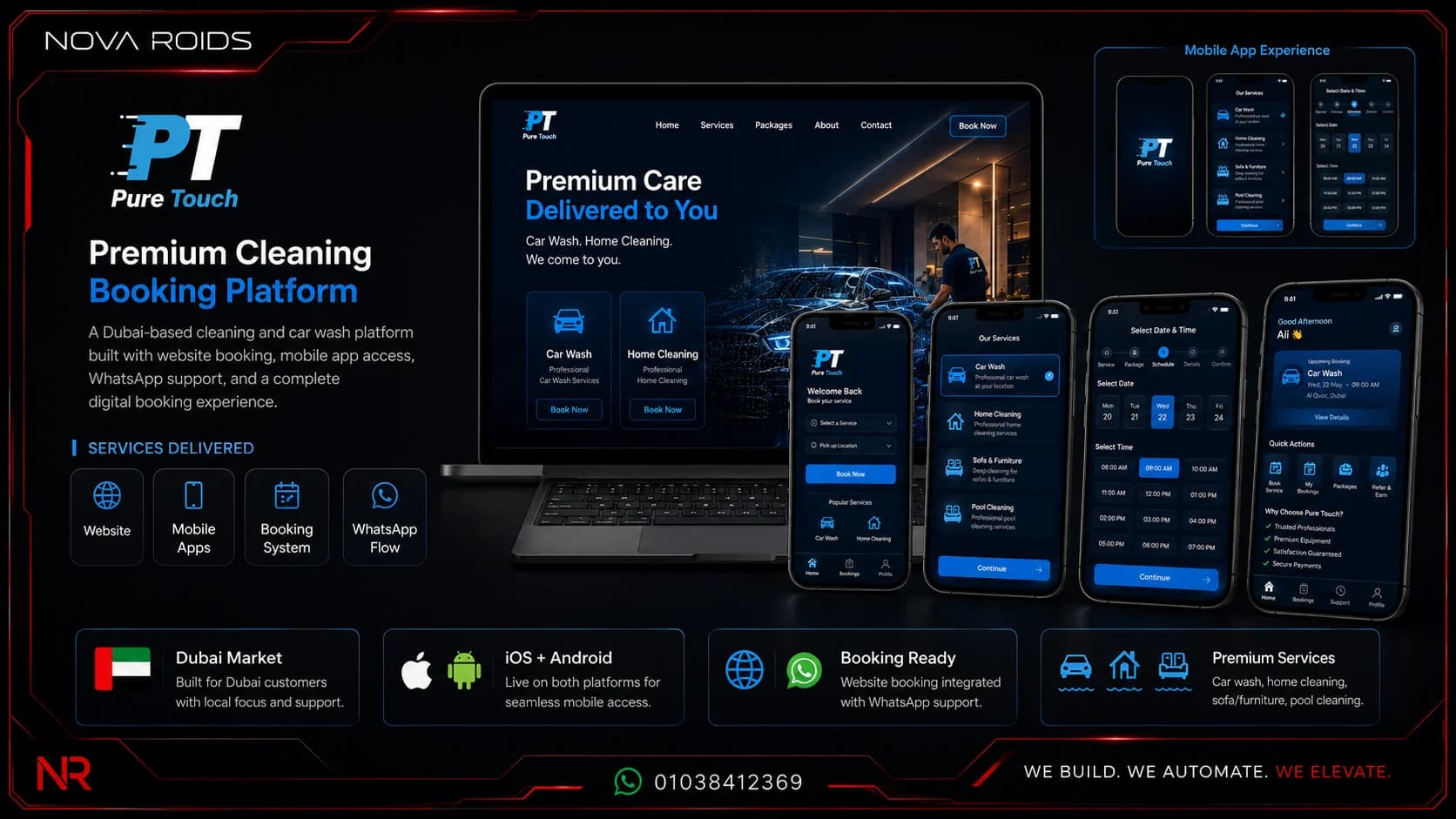
Pure Touch Booking Ecosystem
A premium UAE booking platform for mobile car wash, home cleaning, pool care, locations, packages, and booking operations.
Frequently asked questions
What is included in e-commerce app development in Egypt?+
A typical scope can include iOS/Android app UX, catalogue APIs, customer accounts, search and filters, cart, checkout, payment and COD states, addresses, delivery status, push notifications, order history, admin operations, analytics, security, QA, store submission and post-launch support. Exact scope follows the business model.
Do I need an e-commerce app if I already have a website?+
Not always. If purchase frequency is low and the mobile website converts well, an app may not be the next priority. An app is more justified when repeat use, loyalty, saved state, push notifications, deep links or device capabilities create enough customer value to earn an install.
Will this page compete with ecommerce website development Egypt?+
No. Query ownership is separated. The existing e-commerce website page owns browser-store planning, while this page is written specifically for mobile shopping apps, iOS/Android release, app notifications, device behaviour and app-specific operations. Cross-links connect the topics without duplicating their primary intent.
Should payment success be handled inside the app?+
The app can display payment progress, but the backend should verify the provider callback and determine the authoritative order state. This avoids treating a browser or app redirect as proof of payment and makes retries, cancellations, refunds and reconciliation safer to manage.
How can Nova Roids scope an e-commerce app?+
Send your current store or catalogue, expected customer journeys, payment and delivery methods, required platforms, admin roles, integrations and target launch. Nova Roids can map the order lifecycle and identify whether the app should reuse an existing backend or needs new commerce infrastructure.
Author and technical review

Primary references
Want to turn an online store into a real mobile product?
Share the current store, catalogue, payment and delivery flow, required platforms and the app feature that should make customers install it. We can identify the backend, mobile and operations scope before you commit to a build.