Key takeaways
- Inspect launched products and case-study scope before trusting portfolio claims.
- Normalize backend, admin, QA, store, analytics, and support scope before comparing quotes.
- Choose technology from product constraints rather than vendor preference.
- Document account, source-code, cloud, store, and analytics ownership before development begins.
How this guide was prepared
This guide owns the how to choose a mobile app development company in Egypt search intent and is designed to support the mobile app service page without duplicating direct company, pricing, or adjacent cluster intent.
The guidance combines Nova Roids product-delivery experience, the four mobile project case studies linked on the page, the supplied Google Search Console query patterns, and the named primary references. No market-wide prices, rankings, or guarantees are invented.
What this page owns—and what it deliberately excludes
This is the canonical page for the how to choose a mobile app development company in Egypt query family. It answers the specific decision below without duplicating the service page or adjacent cluster articles.
Topics intentionally handled elsewhere
- Direct mobile app company transactional intent
- Exact app development pricing
- Framework-specific implementation depth
Direct service and enquiry intent belongs to our Mobile App Development service page.
The broader topic is covered by Mobile App Development Process: From Idea to App Store.
Start by separating sales claims from delivery evidence
A mobile app development company in Egypt should be evaluated by products you can inspect, not only logos, awards, or a list of technologies. Open the published apps, read the project pages, check whether the company explains the backend and operational layer, and look for evidence that the product continued beyond a design mockup. A store link does not prove every feature was built by the agency, so the case study should make the scope clear.
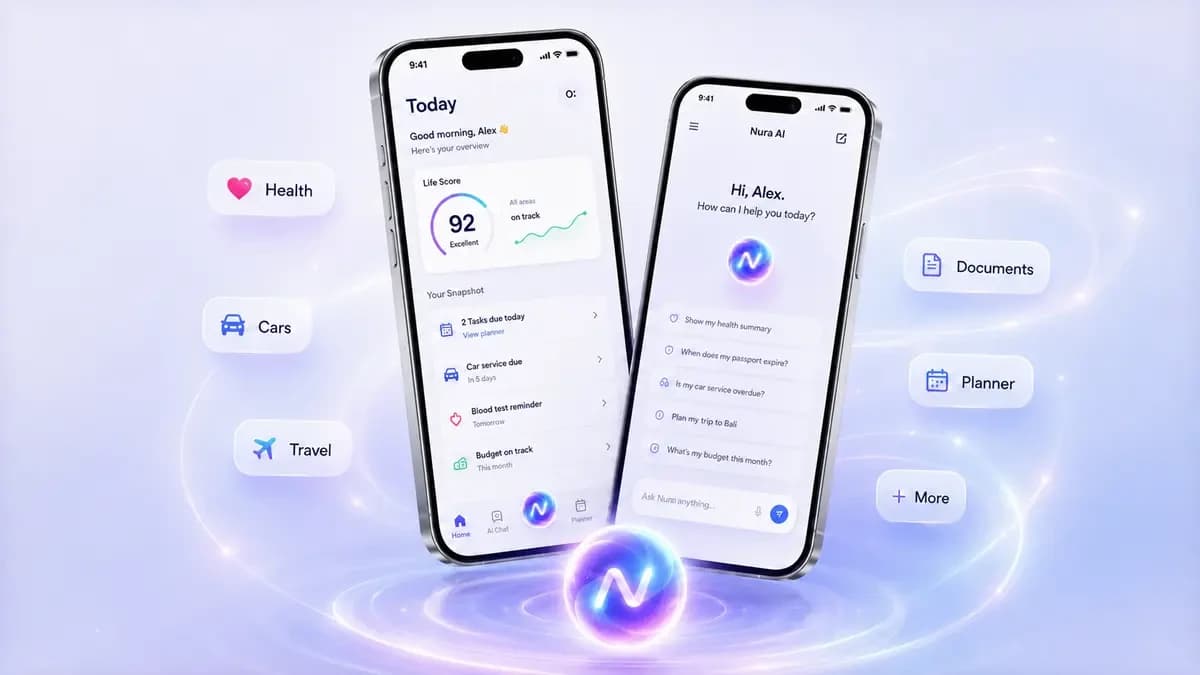
For Nova Roids, the mobile portfolio currently includes Nura AI, PetCare+, MUNCH AI, and Pure Touch. The projects are deliberately used as evidence of different delivery patterns: AI assistant experiences, pet-care workflows, lifestyle planning, and service booking. The service page owns the direct transactional query, while this guide owns the evaluation process used before choosing a provider.
Ready to move from planning to delivery? Review our mobile app development process and deliverables.
Check whether the company scopes the system behind the app
A quote that lists only screens can hide the largest parts of the project. Ask what is included for APIs, database design, authentication, permissions, notifications, file storage, payments, subscriptions, admin dashboards, CRM workflows, analytics, crash monitoring, environments, backups, and release operations. If those systems are not required, the company should be able to explain why. If they are required, they should be visible in the scope.
This is also where proposal comparison becomes fair. One vendor may include backend, store submission, analytics, and three months of structured support, while another may quote only the mobile interface. The lower number is not necessarily the lower total cost. Normalize each proposal into the same scope categories before comparing price or delivery time.
This article belongs to the Mobile App Development Process: From Idea to App Store topic cluster.
Evaluate product thinking before framework preference
A provider should ask about users, core tasks, operating workflows, business model, constraints, and success measures before recommending React Native, Flutter, Swift, or Kotlin. Technology selection should follow the product. If a supplier leads with a framework before understanding device capabilities, offline needs, integrations, background behaviour, or internal team skills, the recommendation may be based on what they sell rather than what the product needs.
Ask the team to explain which parts of the codebase will be shared, which integrations may require native work, how dependency upgrades are handled, and what test burden exists across devices. Clear trade-offs are a stronger signal than claims that one stack is always faster, cheaper, or better.
The next related decision is covered in Mobile App Development Process: From Idea to App Store.
Inspect UX quality in real edge cases
Look beyond polished home screens. Test sign-up, password recovery, permissions, empty states, loading, failed network requests, deep links, notifications, cancellations, rescheduling, and destructive actions where the product supports them. Mobile products reveal quality in the transitions between states. A user should understand whether an action is pending, failed, completed, or needs another step.
Ask how designs are validated before development and how feedback is controlled after a flow is approved. A prototype does not eliminate later change, but it is a cheaper place to find navigation and logic problems. The company should have a process for recording new requests and explaining their impact instead of quietly adding scope until the project becomes unpredictable.
Demand clear ownership of accounts, code, and production assets
Before signing, document who owns the Git repository, Apple Developer account, Google Play Console account, cloud project, domain, analytics, payment accounts, design files, database, and third-party credentials. Business-critical accounts should normally remain under client ownership with appropriate team access. The supplier should not become a permanent single point of failure for releasing or operating the product.
Handover should include the source code, environment documentation, deployment process, account list, key architecture decisions, known limitations, and support responsibilities. If the contract ends, a qualified replacement team should be able to understand how the system is deployed and where the critical dependencies live.
Ask how QA and store release are managed
A reliable company should describe the test strategy in operational terms: supported devices, operating-system versions, critical journeys, network conditions, permissions, payments, notifications, deep links, background behaviour, and regression testing. Store release requires a separate checklist for metadata, screenshots, privacy information, reviewer access, support URLs, and production services. These responsibilities should not appear for the first time after development is declared complete.
Apple and Google can change review requirements, and approval timing is not controlled by the agency. The company can still reduce avoidable rejections by preparing accurate declarations, testing thoroughly, maintaining working reviewer access, and responding quickly to store feedback. Be cautious of anyone who guarantees approval on a specific date without qualification.
Check the post-launch operating and growth model
The first release creates new responsibilities: crash monitoring, dependency updates, operating-system changes, store updates, user support, backend monitoring, content, analytics review, and product iteration. Ask who owns urgent incidents, how fixes are prioritized, what is covered by warranty, and how feature work is estimated. A vague promise of support is less useful than a defined maintenance and release process.
For a growth-focused product, also ask how the company connects the public website, SEO, campaigns, analytics, and CRM to the app. An app can be technically strong and still fail commercially if the business has no acquisition surface, no activation measurement, and no operational process for the users it acquires.
Use a weighted scorecard instead of choosing by total quote
Create a short scorecard that reflects the risk of your project. A consumer subscription app may weight product UX, payments, analytics, and retention heavily. A field-service app may weight offline behaviour, roles, data sync, and support. A regulated workflow may give more weight to security, auditability, data handling, and operational controls. Score every vendor against the same criteria and ask for evidence where a score depends on a claim.
Price still matters, but the comparison should be price for comparable scope and ownership. A proposal that excludes essential backend, admin, store, analytics, or maintenance work can create a false saving. If the project is too large for the available budget, the better response is to reduce the first release deliberately rather than pretend the full product can be delivered safely for less.
Prepare a brief that makes vendor comparison easier
Send every shortlisted company the same one-page product brief: target users, business problem, current process, must-have first-release journey, platforms, required integrations, existing assets, markets, deadline drivers, and success measure. Invite suppliers to list assumptions and questions before final pricing. This creates a cleaner comparison than asking each company to interpret a different casual conversation.
The best early signal is often the quality of the questions you receive. A team that challenges unclear requirements, identifies dependencies, and separates must-have behaviour from later ideas is reducing risk before development starts. A team that immediately returns a feature list and price may simply be converting your first assumptions into a contract.
Mobile app development company evaluation scorecard
| Area | What to verify | Red flag |
|---|---|---|
| Launched products | Store or live product evidence with clear project scope | Mockups presented as launches |
| Product discovery | Users, workflows, risks, first-release outcome | Price before meaningful discovery |
| Backend + operations | APIs, database, admin, CRM, ownership | Only screens are scoped |
| QA + release | Device tests, permissions, stores, reviewer access | Store work left to the final week |
| Ownership + support | Client accounts, code, documentation, maintenance | Critical accounts controlled only by vendor |
Questions and checks before you commit
What clients highlighted
“The website finally explains our services clearly, loads fast, and gives our team a cleaner way to receive qualified enquiries.”
“The SEO structure made the site easier to understand. We could see which pages target traffic, which pages convert, and what to publish next.”
Relevant Nova Roids project work
These case studies show related delivery experience. They do not imply that every feature discussed in this guide was used on every project.
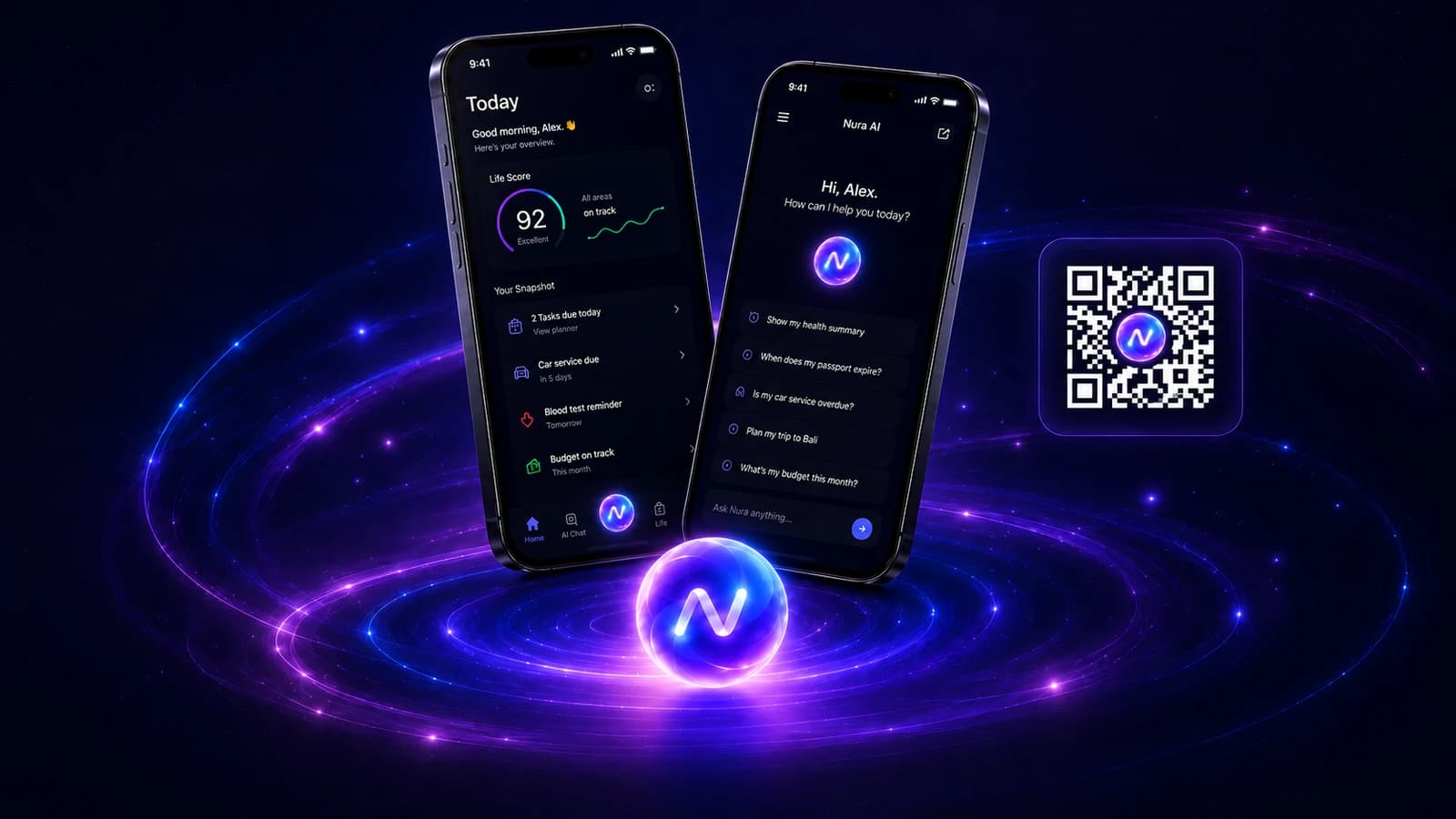
Nura AI Life Assistant
A personal AI life assistant for natural chat and voice, tasks, reminders, files, expenses, memory controls, and connected everyday context.
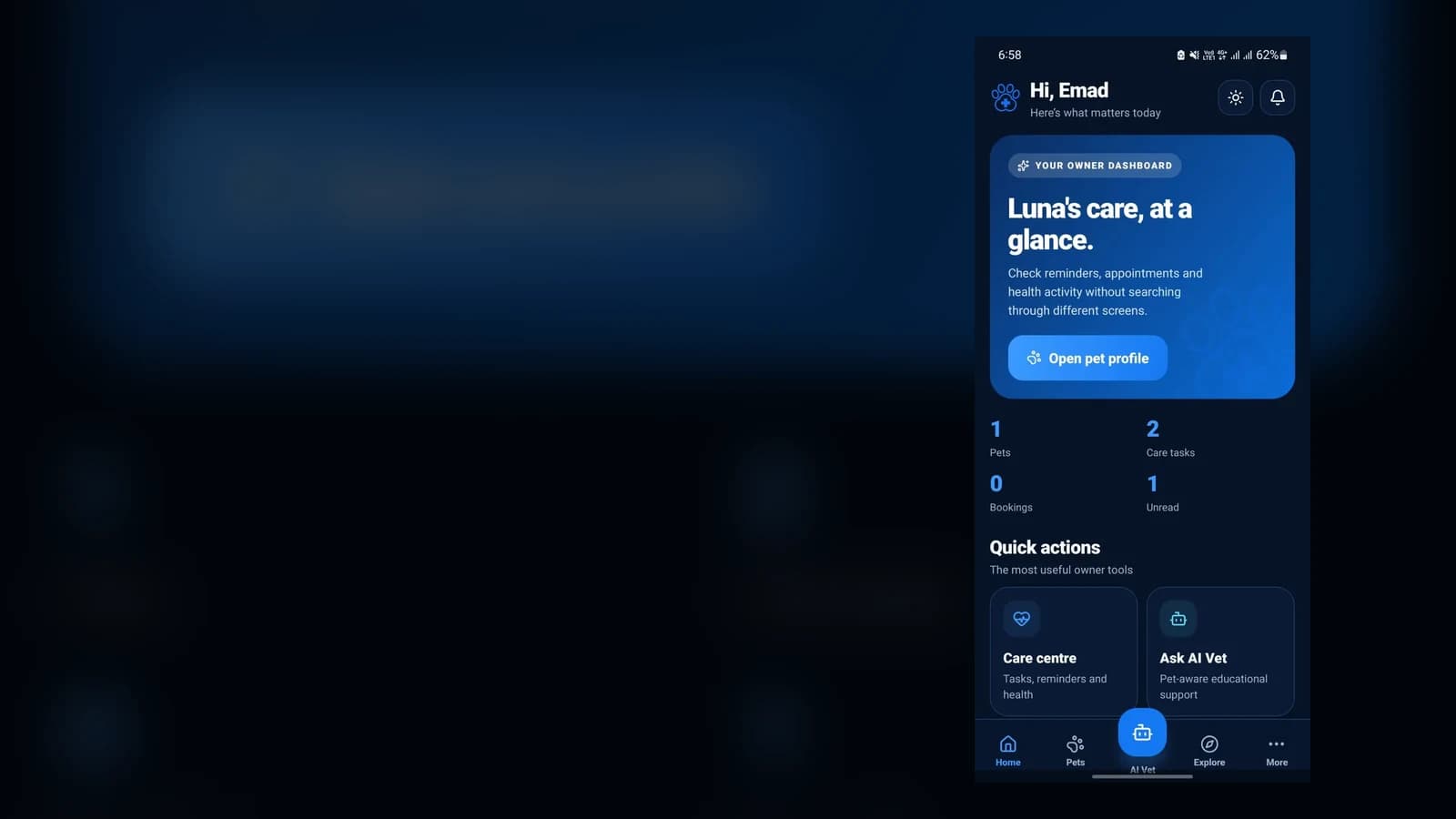
PetCare+ Pet Care Platform
A mobile pet-care platform combining pet profiles, care tasks, bookings, notifications, and an AI Vet entry point with a connected digital growth system.
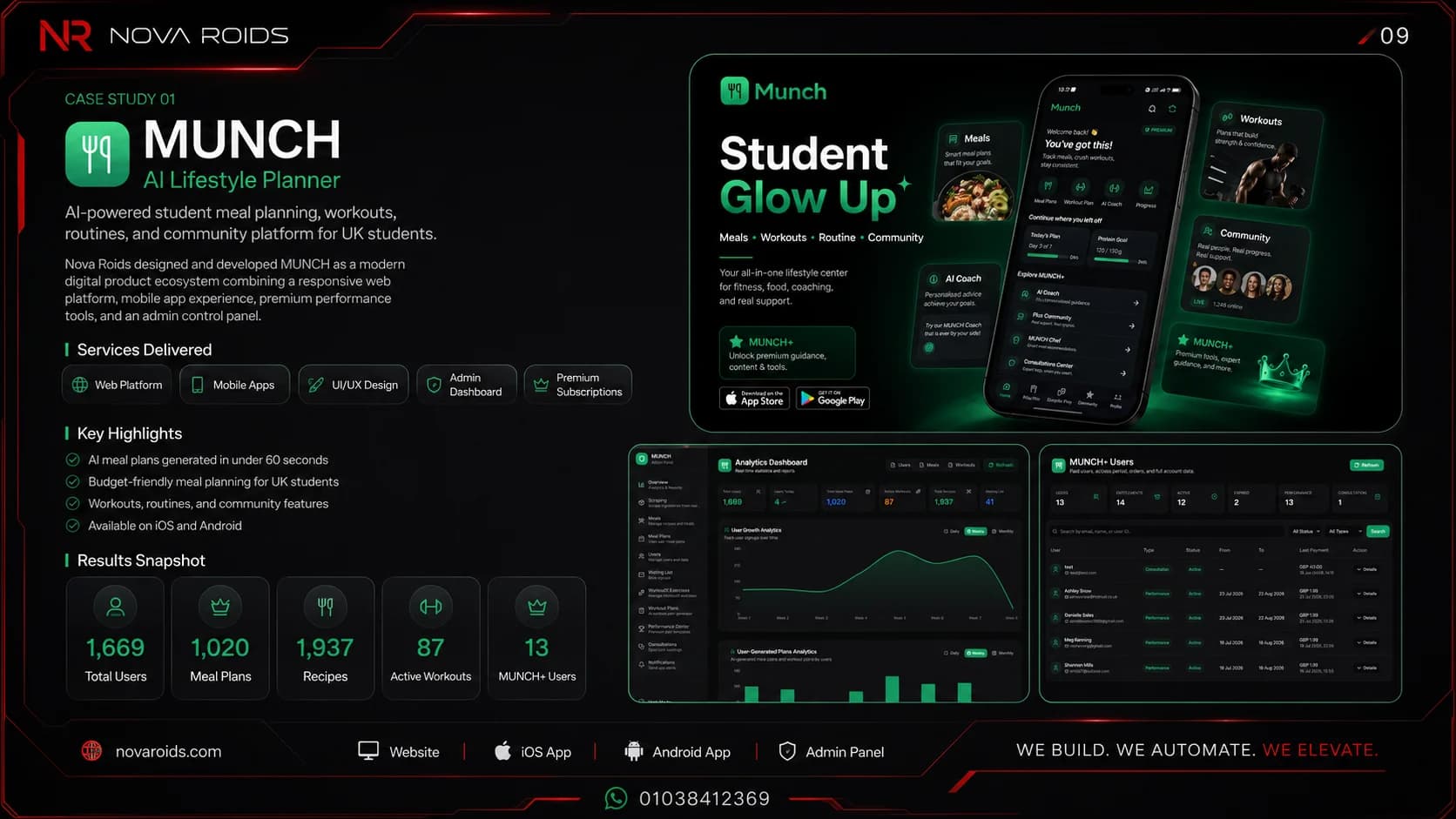
MUNCH AI Lifestyle Platform
An AI-powered mobile and web ecosystem for meal planning, workouts, performance tracking, community, and student lifestyle management.
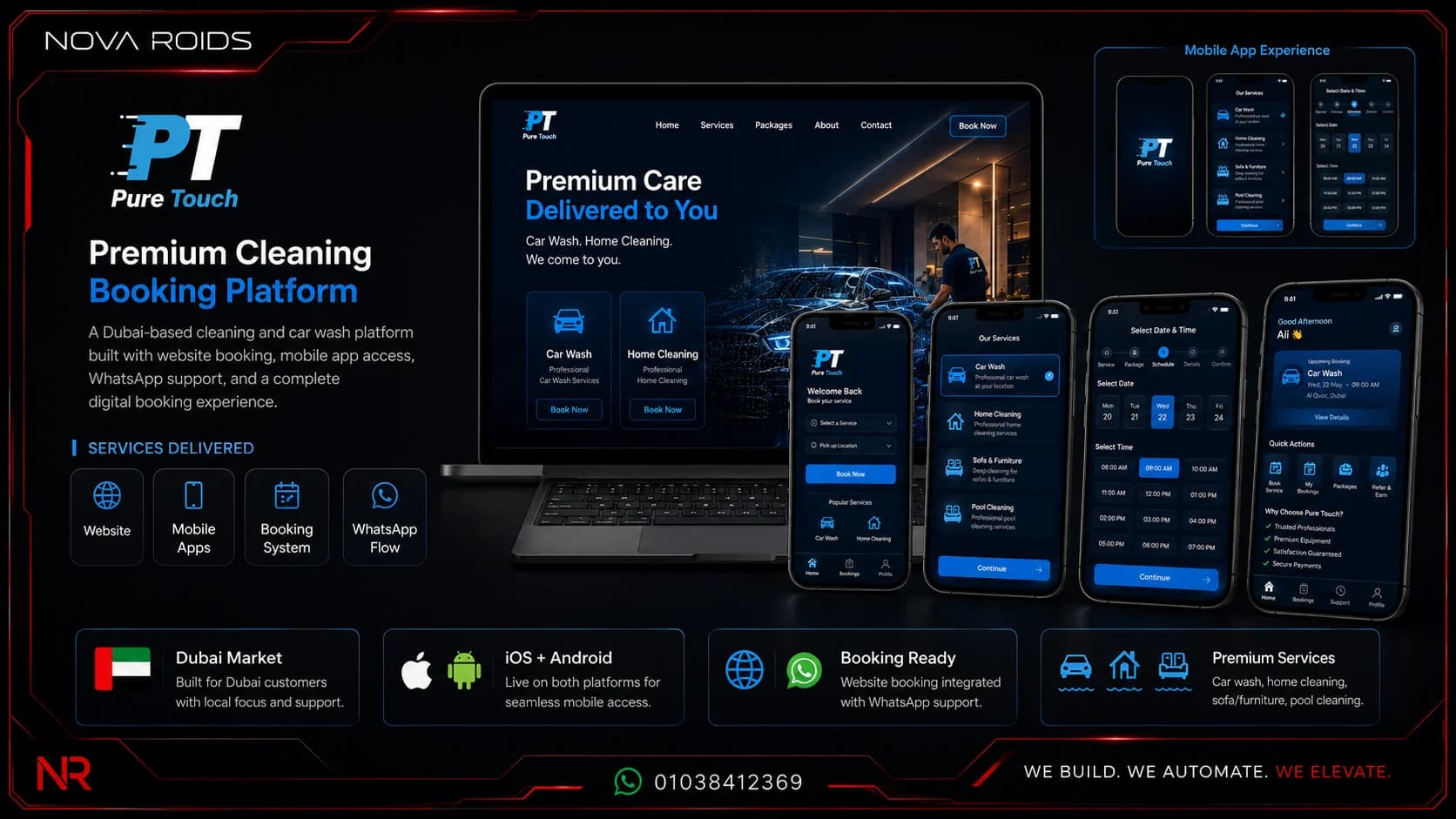
Pure Touch Booking Ecosystem
A premium UAE booking platform for mobile car wash, home cleaning, pool care, locations, packages, and booking operations.
Frequently asked questions
How do I choose a mobile app development company in Egypt?+
Start with launched products, then evaluate discovery quality, UX, backend and admin scope, technology reasoning, QA, store release, account ownership, post-launch support, and measurable growth capabilities. Compare companies against the same brief and normalize what is included before comparing the total price.
Should I choose the cheapest mobile app development quote?+
Not without normalizing scope. A cheaper quote may exclude backend work, admin tools, analytics, store submission, QA, content, or post-launch support. Compare the same production responsibilities first. If the budget is limited, reduce the first release deliberately instead of removing invisible quality and operating work.
What portfolio proof should an app company provide?+
Ask for published App Store or Google Play links where available, project pages explaining the scope, and examples relevant to your product type. Treat mockups, logos, and screenshots as supporting evidence rather than proof of a complete launch unless the company clearly explains what it delivered.
Who should own the Apple and Google Play accounts?+
Business-critical developer and production accounts should normally remain under the client or product company, with the delivery team granted the access it needs. Confirm ownership of repositories, cloud, domains, analytics, payment accounts, databases, and design assets in writing before launch.
Can Nova Roids handle the website, CRM, SEO, and marketing around the app?+
Yes. Nova Roids can scope the mobile product together with backend and CRM operations, a public website or landing system, SEO and content architecture, analytics, and digital marketing when those layers support the product model. The scope is selected from the use case instead of forcing every service into every project.
Author and technical review
Primary references
Planning a mobile product?
Share the users, core workflow, required integrations, target market, and first-release goal. Nova Roids will help turn the idea into a scoped product system.