Key takeaways
- Create and assign ownership of Apple and Google developer accounts before the final release week.
- Freeze the launch candidate long enough to run end-to-end device, backend, and operational testing.
- Store declarations, privacy copy, permissions, screenshots, and the submitted product must agree.
- Verify analytics, website, SEO, support, and incident ownership before marketing spend scales.
How this guide was prepared
This guide owns the mobile app launch checklist search intent and is designed to support the mobile app service page without duplicating direct company, pricing, or adjacent cluster intent.
The guidance combines Nova Roids product-delivery experience, the four mobile project case studies linked on the page, the supplied Google Search Console query patterns, and the named primary references. No market-wide prices, rankings, or guarantees are invented.
What this page owns—and what it deliberately excludes
This is the canonical page for the mobile app launch checklist query family. It answers the specific decision below without duplicating the service page or adjacent cluster articles.
Topics intentionally handled elsewhere
- Detailed Apple or Google policy interpretation
- Direct vendor-selection intent
- Post-launch maintenance depth
Direct service and enquiry intent belongs to our Mobile App Development service page.
The broader topic is covered by Mobile App Development Process: From Idea to App Store.
Create the store accounts before the release week
Decide who owns the Apple Developer and Google Play Console accounts at the start of the project. Confirm legal entity details, team access, package identifiers, bundle identifiers, signing, and production contact information while development is still underway. Waiting until the final build can expose account verification or permission issues at exactly the point when the team expects to launch.
The product company should normally retain control of the business-critical store accounts. The delivery team can receive appropriate access for build and submission work. Document who can create certificates, manage app records, change pricing or availability, answer review messages, and publish releases so ownership remains clear after the agency engagement ends.
Ready to move from planning to delivery? Review our mobile app development process and deliverables.
Freeze the first-release scope before final QA
A launch candidate should not still be absorbing major feature changes. Move new ideas into the next-release backlog unless they correct a critical issue or missing requirement. Late scope expansion increases regression risk because a change can affect permissions, backend behaviour, store declarations, screenshots, analytics, or onboarding flows that were already tested.
Define a release branch or equivalent process, list the critical journeys, and require explicit sign-off for high-risk changes. The goal is not to stop improvement. It is to create a stable product long enough to verify that the version submitted to the stores is the same product that operations, support, and marketing are prepared to launch.
This article belongs to the Mobile App Development Process: From Idea to App Store topic cluster.
Run a real-device and failure-state test pass
Test account creation, sign-in, password recovery, permissions, notifications, deep links, uploads, payments or subscriptions where relevant, background transitions, slow networks, timeouts, expired sessions, empty states, and destructive actions. Use representative iOS and Android devices rather than relying only on simulators. Verify text wrapping, keyboard behaviour, safe areas, and accessibility on smaller screens.
Operational staff should test the corresponding admin or CRM states at the same time. Confirm that a user action appears correctly in the backend, that support can understand failures, and that notifications match the authoritative state. End-to-end testing catches issues that isolated mobile screens cannot reveal.
The next related decision is covered in Mobile App Development Process: From Idea to App Store.
Verify production services and configuration
The release build must point to the intended production APIs, storage, authentication, analytics, payment environment, push-notification configuration, deep-link domains, and other services. Keep secrets out of the mobile bundle where they do not belong. Confirm that monitoring and logging are active before public users arrive so failures are visible immediately.
Apple specifically notes that backend services should be live and accessible during review for apps that depend on them. Prepare a reviewer account or demo path when account-based features would otherwise block review. Do not submit placeholder content, broken URLs, or an app that needs a manual backend switch after the reviewer opens it.
Prepare accurate privacy and permission declarations
List the information the app collects, how it is used, which third-party SDKs receive data, and which device permissions are requested. The store declarations, privacy policy, in-app explanations, and actual implementation should agree. Remove permissions that are no longer needed. Sensitive permissions may trigger additional review or policy requirements, so investigate them before submission rather than after rejection.
Account deletion, data export, consent, and privacy settings should work as described for the product. If legal review is required for the market or data category, complete it before launch. A template policy cannot make an implementation compliant by itself; the written policy and technical behaviour must describe the same system.
Build the store listing around the real product
Prepare the app name, subtitle or short description, full description, category, screenshots, preview assets where used, support URL, marketing URL, privacy URL, age or content declarations, and release notes. Screenshots should show current interfaces and accurately represent paid or subscription features. Marketing copy should not promise functionality the submitted build does not provide.
Store metadata should be treated as a product surface with its own search and conversion role. Use clear problem-and-value language, localized copy when the market justifies it, and screenshots that explain the core journey quickly. Keep the website and store positioning consistent so users do not arrive with different expectations from each acquisition source.
Use test tracks before a full Android rollout
Google Play supports internal, closed, and open testing tracks in addition to production. Use the appropriate track to validate installation, account flows, notifications, payments, analytics, and operational readiness with real testers before broad release. Testing also gives the team a controlled way to verify production-like behaviour without immediately exposing every issue to the public listing.
For iOS, TestFlight can serve a similar pre-release purpose. The exact testing plan depends on risk and audience, but the principle is the same: use real devices and real people before the final public release. Capture actionable feedback rather than asking only whether testers liked the app.
Connect analytics before marketing spend starts
Verify campaign attribution, website events, deep links, account creation, activation, core product actions, purchase or booking events, and retention signals before scaling acquisition. A launch campaign without working measurement can create traffic while leaving the team unable to tell which source brings useful users or where the onboarding funnel fails.
Create a simple launch dashboard that combines acquisition, activation, product reliability, and the commercial outcome. Do not wait for a perfect data warehouse. The first goal is to answer high-value questions quickly: are people arriving, completing the first useful action, returning, and encountering errors that the team can fix?
Prepare support, incident, and release ownership
Write down who monitors crashes, backend errors, store reviews, support requests, campaign problems, and high-impact user reports during launch. Define escalation and communication paths so a production issue does not turn into a search for whoever remembers how the system works. Keep a rollback or hotfix process for the parts of the stack that support it.
After launch, group issues by severity and user impact. Not every comment should become an immediate feature request. Protect critical stability first, then use analytics and support patterns to prioritise the next release. Keep version notes and incident learnings so later updates do not repeat the same failure.
Use the website, SEO, and campaigns to support discoverability
Publish the product website, feature pages, support content, policy pages, and high-intent SEO guides before or around launch so search engines and campaign users have a stable destination. Connect App Store and Google Play buttons, deep links, and campaign landing pages clearly. The website should explain enough value for a prospect to understand why the app is relevant before leaving for a store.
SEO takes time, so content architecture should not begin after the launch campaign ends. Assign query ownership across the service or product page, pricing or comparison guides, industry use cases, and support content. This creates a durable acquisition layer that complements paid launch activity rather than depending entirely on store search and ads.
Mobile app launch readiness by owner
| Area | Product / business | Delivery team |
|---|---|---|
| Accounts | Own legal entity and store access | Configure identifiers, signing, build access |
| Product | Approve stable launch scope and copy | Complete QA and release candidate |
| Privacy | Approve accurate policy and business declarations | Implement permissions and data behaviour |
| Growth | Approve positioning, campaigns, support | Verify analytics, deep links, website handoff |
Questions and checks before you commit
What clients highlighted
“The website finally explains our services clearly, loads fast, and gives our team a cleaner way to receive qualified enquiries.”
“The SEO structure made the site easier to understand. We could see which pages target traffic, which pages convert, and what to publish next.”
Relevant Nova Roids project work
These case studies show related delivery experience. They do not imply that every feature discussed in this guide was used on every project.
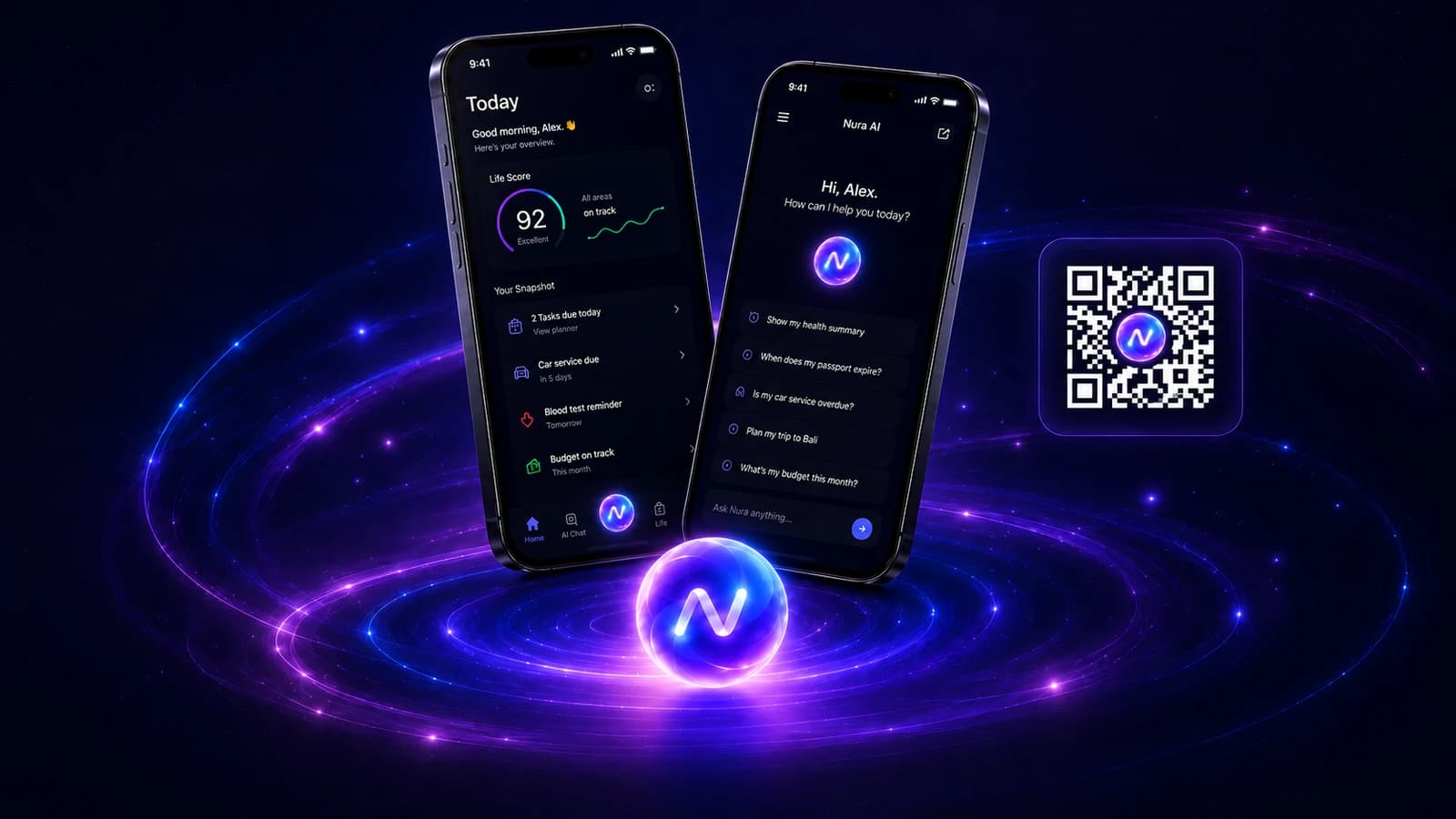
Nura AI Life Assistant
A personal AI life assistant for natural chat and voice, tasks, reminders, files, expenses, memory controls, and connected everyday context.
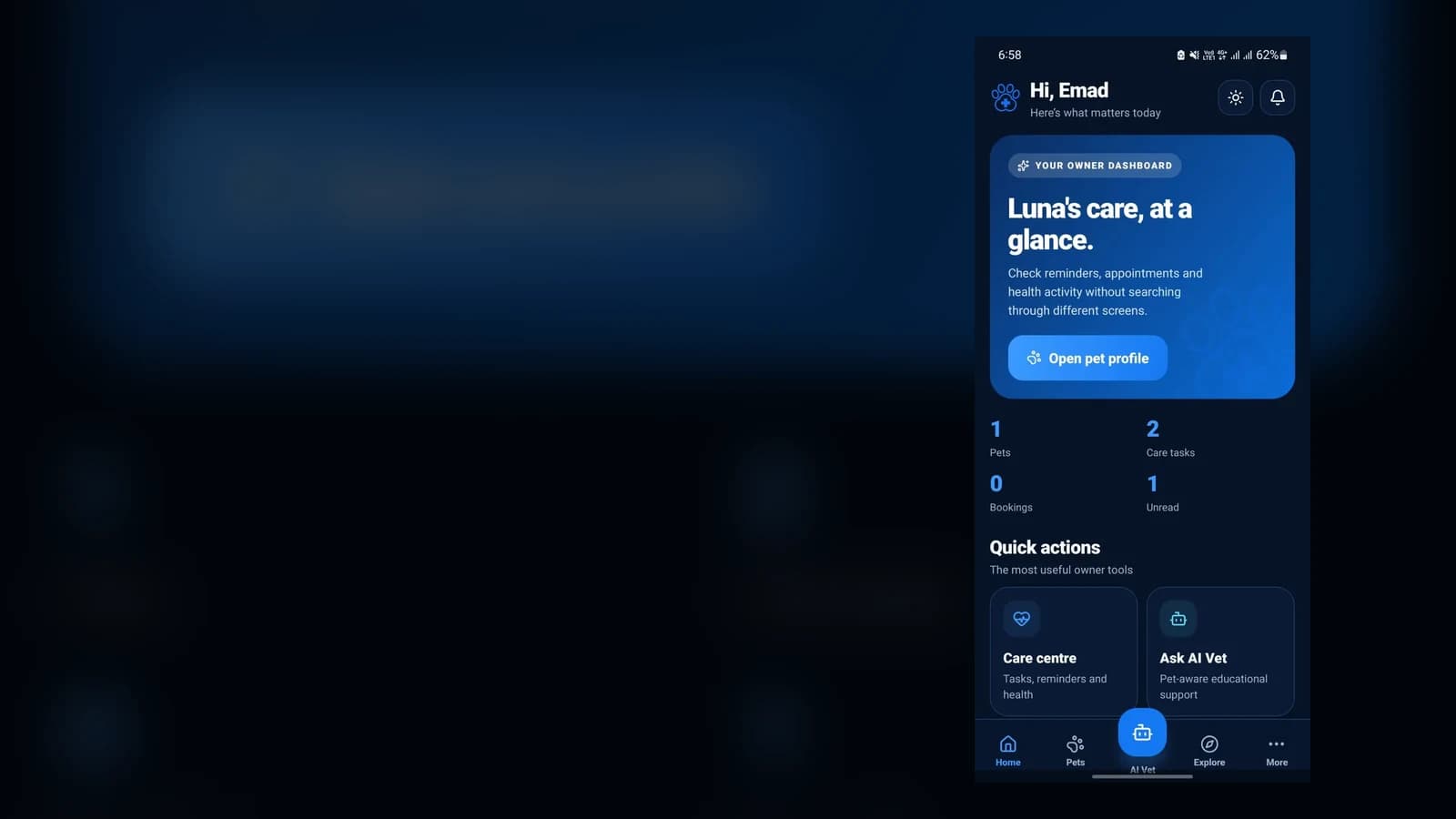
PetCare+ Pet Care Platform
A mobile pet-care platform combining pet profiles, care tasks, bookings, notifications, and an AI Vet entry point with a connected digital growth system.
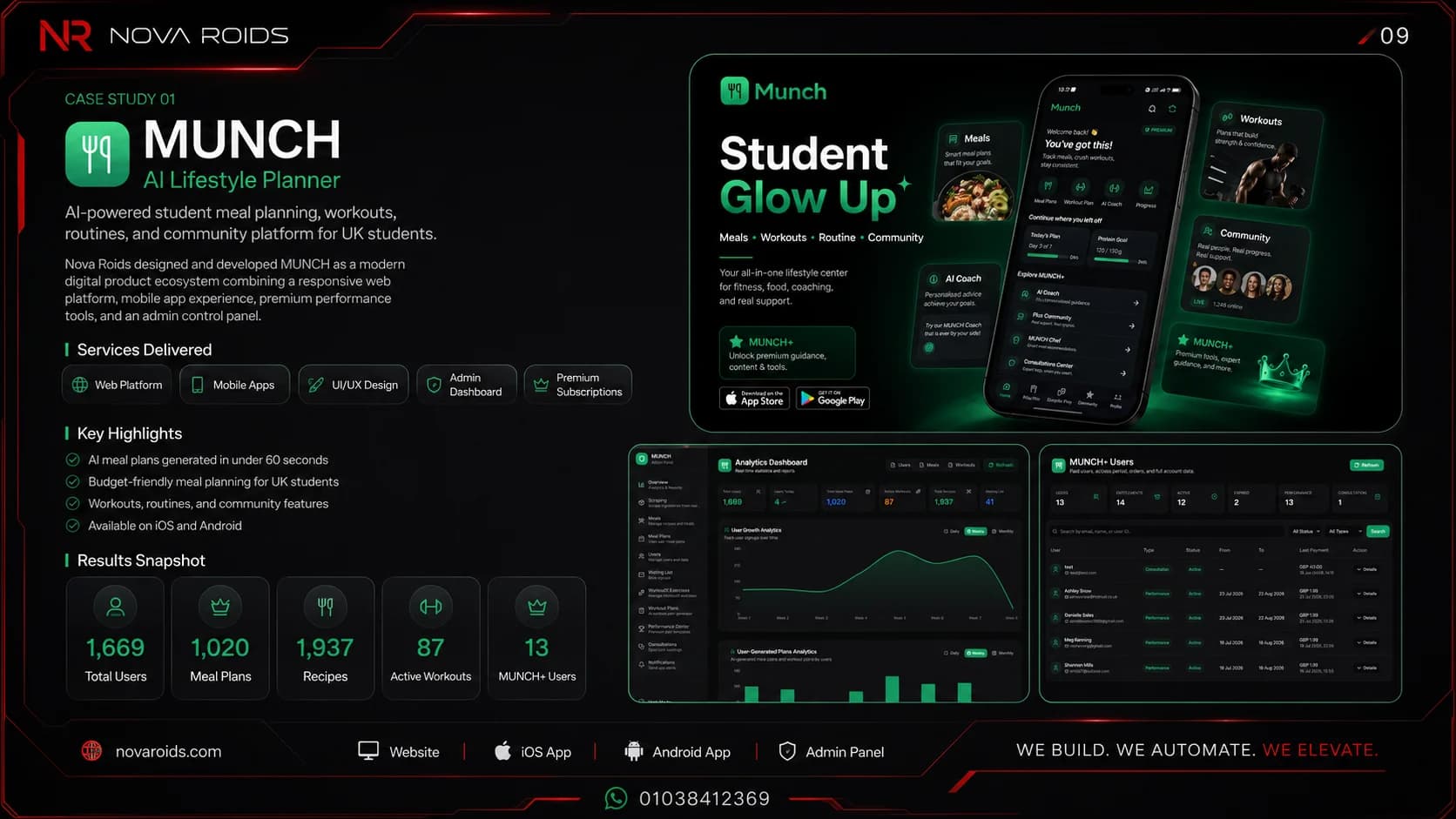
MUNCH AI Lifestyle Platform
An AI-powered mobile and web ecosystem for meal planning, workouts, performance tracking, community, and student lifestyle management.
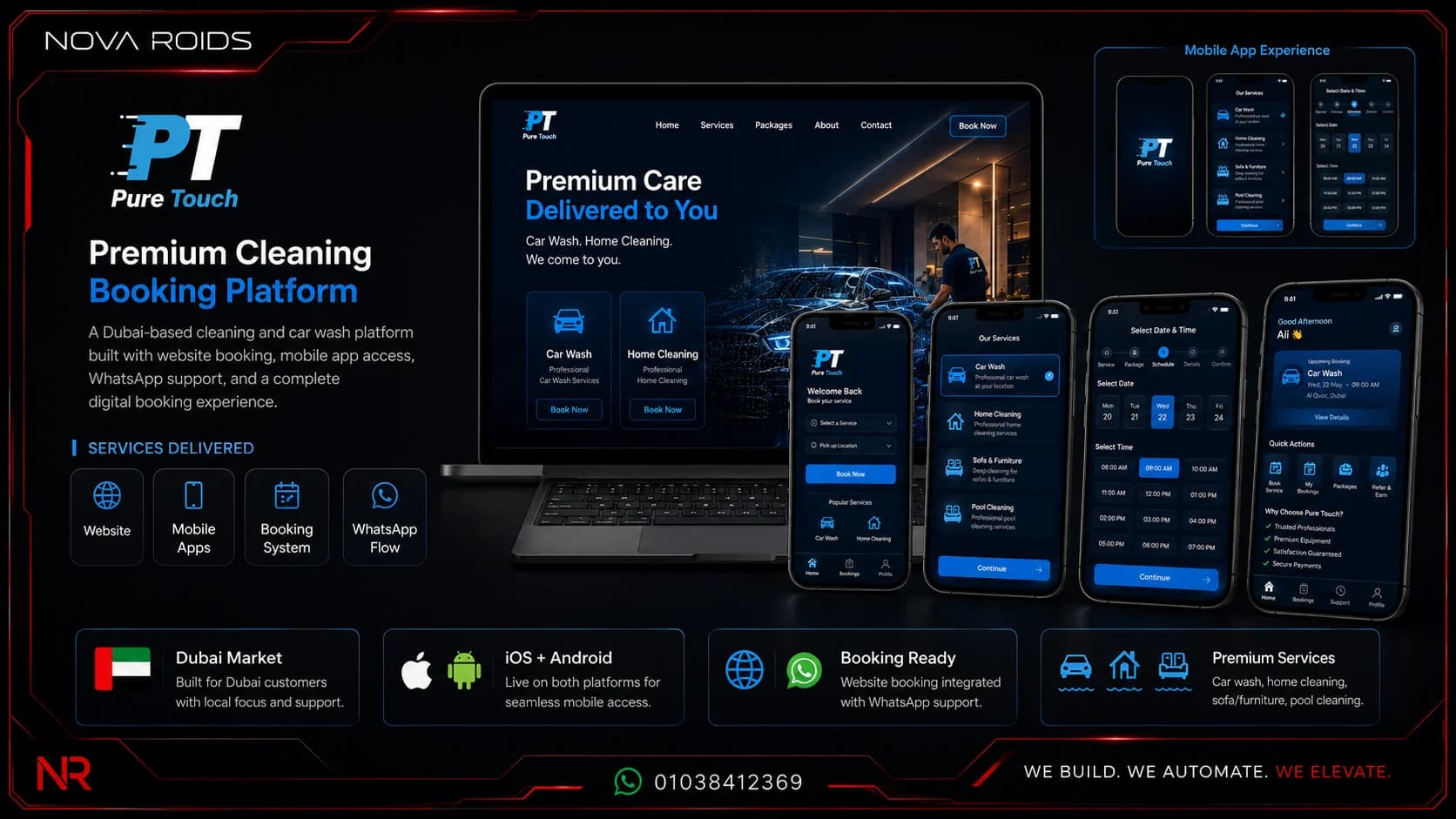
Pure Touch Booking Ecosystem
A premium UAE booking platform for mobile car wash, home cleaning, pool care, locations, packages, and booking operations.
Frequently asked questions
What should be on a mobile app launch checklist?+
Cover store-account ownership, release scope, real-device QA, production backend configuration, privacy and permissions, store metadata, reviewer access, testing tracks, analytics, deep links, website and support URLs, monitoring, incident ownership, and the first post-launch release process. The checklist should reflect the actual features and risks of the product.
When should App Store preparation start?+
Start during development, not after the final build. Account verification, privacy declarations, screenshots, support URLs, reviewer access, in-app purchases, and production backend readiness can all affect submission. Early preparation reduces avoidable last-week blockers.
Should I launch marketing before analytics is ready?+
No large campaign should scale before the team can measure the journey from acquisition to meaningful product use. Verify website and app events, deep links, activation, commercial outcomes, and reliability first. A campaign can generate traffic without useful learning if the measurement layer is incomplete.
Does Nova Roids handle App Store and Google Play release support?+
Mobile app development scope can include store preparation and release support together with QA, production configuration, analytics, website, SEO, and post-launch work. Exact responsibilities are defined during discovery because account ownership, subscriptions, permissions, and market requirements vary by product.
Author and technical review
Primary references
Planning a mobile product?
Share the users, core workflow, required integrations, target market, and first-release goal. Nova Roids will help turn the idea into a scoped product system.